
EXCLUSIVE INTERVIEW
Belaslava Kryshtapovich – The Voice Reborn, Art as Destiny
Conducted by Guillaume Jean Lefebvre
1.Your voice loss was a turning point that redirected your entire artistic path. Looking back today, what inner qualities did this crisis reveal in you that you may not have discovered otherwise?
If I hadn’t lost my voice, I would likely still be acting in the theater. There would have been new productions, but I doubt I would have ever dared to direct my own films. I believe those difficult times helped me truly hear my own voice. They helped me become braver, more persistent, more focused, more decisive, and taught me to rely on my own judgment and sense of beauty.
2. Throughout your career, you have balanced vulnerability and resilience—especially when facing doubts from others. What internal dialogue helps you stay loyal to your creative vision when external voices try to reshape it?
I always tell myself that I am doing the best I possibly can. I have a dream, inspiration, and hope for a bright future, and I am immensely grateful for the support and participation in my projects from my actor friends and cinematographers. I truly love my films. I cherish the feeling one gets watching my film “Phantom Dream”, and I hope “Alice” turns out just as wonderful.
3. Your artistic identity has been shaped by influences ranging from Tom Cruise to Michael Jackson and even classical opera. How do these seemingly contrasting inspirations merge into a single artistic language that is uniquely yours?
I believe what unites them all is greatness, extraordinary intellect, talent, work ethic, perfectionism, dedication to their craft, the courage to express their true nature, passion for what they do, and that sense of drama when all emotions reach their peak. In my view, all my sources of inspiration blend beautifully. At different stages of my life, each one helped uncover my own talents and character traits that were perhaps dormant deep inside me, until they awoke and revealed themselves to the world. After all, I’m not trying to be anyone’s copy. I am me; they are them. Everyone is unique in their own way, and that is astonishing.
4. You often speak about harmony—both with yourself and with the world around you. In your view, what does creative harmony truly mean, and how does it manifest on a film set or in your personal life?
Creative harmony means making projects you genuinely love. I adore working with my friends, good acquaintances I’ve known for years—people who are kindred spirits, creative, pleasant in nature, and enthusiastic. I love arriving on set knowing that it will be a wonderful day because we are all building something together. Even if difficulties arise, we will overcome them, and everything will be good again.
5. You mentioned that as a director, you value kindness as a form of strength. Can you describe a moment on set where your leadership style directly changed the atmosphere or outcome of a scene?
As with any creative group, even if moments of disagreement arise, I simply explain what I need from the actor, cinematographer, or any crew member, and then we move forward. I work with friends and colleagues I’ve known for many years, and we always find common ground easily.
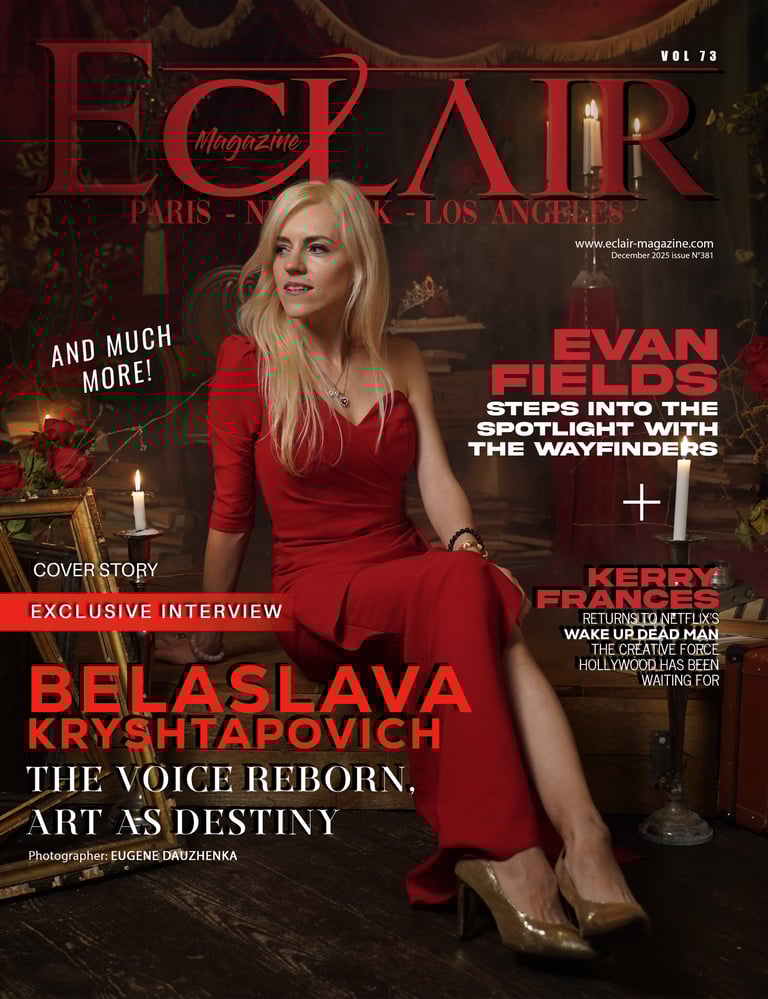
Born in Minsk, in the heart of a Belarus shaped by forests, lakes, and ancient stories, Belaslava Kryshtapovich carries a name that means “Glory to God” in Old Belarusian—a name both solemn and poetic, perfectly reflecting the imprint she would later leave on the artistic world. Raised in a deeply creative environment, surrounded since childhood by artists, musicians, and intellectuals, she grew up in a universe where imagination was second nature.
Throughout her journey, Belaslava developed a guiding conviction: success only has meaning if one remains true to oneself. She seeks harmony with the world, moves at her own pace, listens to her intuition, nurtures her joy of creating, and hopes to bring a little light wherever she goes.
Her years in the theater left a deep imprint. On stage, she carried major female roles and faced the pressure of full audiences, daily rehearsals, and short-film shoots. Until exhaustion struck. One day, her voice simply vanished. She had to leave everything—acting, cinema, singing lessons. It was devastating. For weeks, she communicated only through gestures. The world she knew crumbled… yet a quiet intuition told her that this upheaval carried meaning.
Six months after stepping away from the stage, she acted in a short film, regained her creative strength, then wrote and directed “Phantom Dream,” her first short film, in which she also starred. It was a rebirth—proof that trials often hide secret doors leading to one’s true path.
Her artistic identity began taking shape early. As a child, she listened to Joe Cocker, Kenny G, Tina Turner, Billy Joel, and immersed herself in cinematic worlds like Superman, Back to the Future, and Walker Texas Ranger. At twelve, “The Lord of the Rings” ignited a passion for painting. At fourteen, “The Blues Brothers” pushed her to sing and dance despite her shyness. At sixteen, Michael Jackson became a lifelong inspiration, leading her to create her band “Phoenix,” which performed in the streets and at charity events. At seventeen, “Janis and John” inspired her to be a little bolder.
Later, while studying architecture at the university, she found comfort in action films—The Matrix and Jet Li—before being profoundly moved by Tom Cruise. The poster of Mission: Impossible – Rogue Nation was enough to change her destiny. She walked out of the cinema with absolute certainty: she would become an actress. For more than ten years, she trained in acting, directing, cinematography, and screenwriting, while also performing on stage for four years. When her voice disappeared, crushing her hopes, it was once again Tom Cruise’s films that helped rebuild her confidence, overcome her fear of flying, return to acting classes, and ultimately direct Phantom Dream. Today, she is filming her feature film “Alice.” and recieving second higher education at the Academy of Arts, Drama Theater Directing.
Creating her first film was far from easy. She was advised to rewrite her story, change the music, modify the characters. But deep down, she knew her script was authentic. The day she stopped seeking outside approval, she found a team who loved her vision. Phantom Dream taught her to trust herself and embrace her creative identity.
Some believe a director must be strict or domineering. Belaslava thinks the opposite. For her, kindness is a strength, and a set is never as creative as when harmony prevails. Her gentle leadership is her signature.
To preserve her balance in such a demanding field, she seeks simple joys: listening to music she loves, spending time with her family and cats, enjoying a quiet cup of tea. Creativity fills her daily life—especially her love for opera, its music, costumes, masks, and grandeur.
Over the years, her definition of success has evolved. She still dreams of major films and unforgettable roles, but never at the expense of her inner peace. Today, success means living in alignment with herself.
On a personal level, she dreams of a simple, luminous life: a house with a garden, a warm family, and her cats exploring the grass under an open sky. Professionally, she hopes to star in films people will still want to watch decades from now, like the timeless classics played every New Year. She also hopes to return to the theater and offer audiences moments of escape. For over ten years, she has cared for homeless animals—feeding, rescuing, and helping them find loving homes. Her greatest dream is to open shelters for animals in need.
To her, competition is both real and illusory. If something is meant for her, it will come. If not, it was never hers. She believes in effort, dedication, and destiny, guided by authenticity and grace.
If she could speak to her younger self, she would simply say: “Be yourself. Move forward without waiting. Everything will be as it should be.”
How would she like to be remembered? With one word: Kindness. Because gestures fade, but the warmth one leaves in others’ hearts endures.
INTERVIEW
6. Your biography highlights a long journey of self-training—acting, directing, cinematography, screenwriting. Which discipline challenged you the most, and how did mastering it deepen your artistic maturity?
I think directing and screenwriting were simultaneously the hardest and easiest disciplines for me. Writing a script has always come naturally. In the initial stages, the difficulty lay in learning to defend my creative vision and ideas, relying on my own opinion and inner voice. In directing, the challenges involve with the endurance required for a feature film, where there is so much to manage over a long period. I must remain strong and lead the team while simultaneously acting in my own movie.
7. You have a strong emotional connection to cinema as a source of hope during difficult periods. What kind of emotional or spiritual impact do you hope your own films will have on people going through similar challenges?
“Phantom Dream” is the story of Arthur, a talented writer who loses touch with reality, and his literary muse, Agatha. I deeply love the feeling the film evokes—a warm, kind, inspiring, and soul-soothing sensation, offering hope for a brighter future. I hope that anyone who watches my film will feel that same warmth and comfort in their soul and be inspired to start achieving what they dream of. “Alice”, on the other hand, is turning out very creative, a bit quirky, as Alice is an artist and everything takes place on the eve of Halloween. My love for costumes and makeup truly came alive in this film. I hope that after watching it, both I and the audience will feel what Alice feels: the desire to create our own masterpieces, to listen to our inner voice and intuition, and to follow our hearts.
8. You often speak of destiny and intuition guiding your path. Can you recall a specific moment when following your intuition—despite fear—led you to an unexpected opportunity or breakthrough?
Perhaps my trips to London led to my breakthrough. Six years ago, I first went to Pinewood Studios for an acting course taught by Mel Churcher. That was about stepping out of my comfort zone, acting in English, and being on a real set for the first time. That trip led me to subsequent annual theater and film acting courses, followed by four years of stage work, and then directing, screenwriting, and cinematography courses. This year, my trip to the Shakespeare’s Globe Theatre also had a profound impact, as I needed to test the strength of my voice and character once again and return to London. I was deeply struck by a phrase they constantly repeated: “Here at the Globe, there is nothing right or wrong. Be yourselves, experiment, take risks, don’t be afraid to make mistakes, because that is how experience is built.” Those thoughts feel so uplifting. At that moment, hearing that was so important to me, and playing Lady Anne in Richard III was an incredibly warm and moving experience. It was an amazing, powerful feeling.
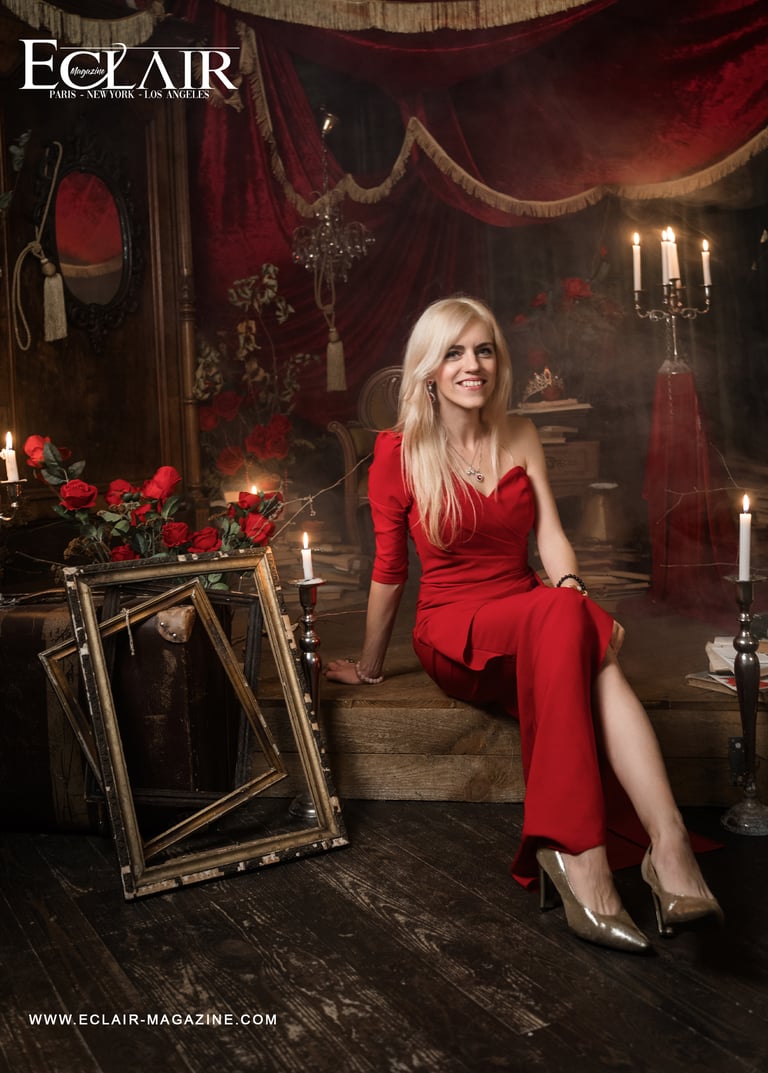
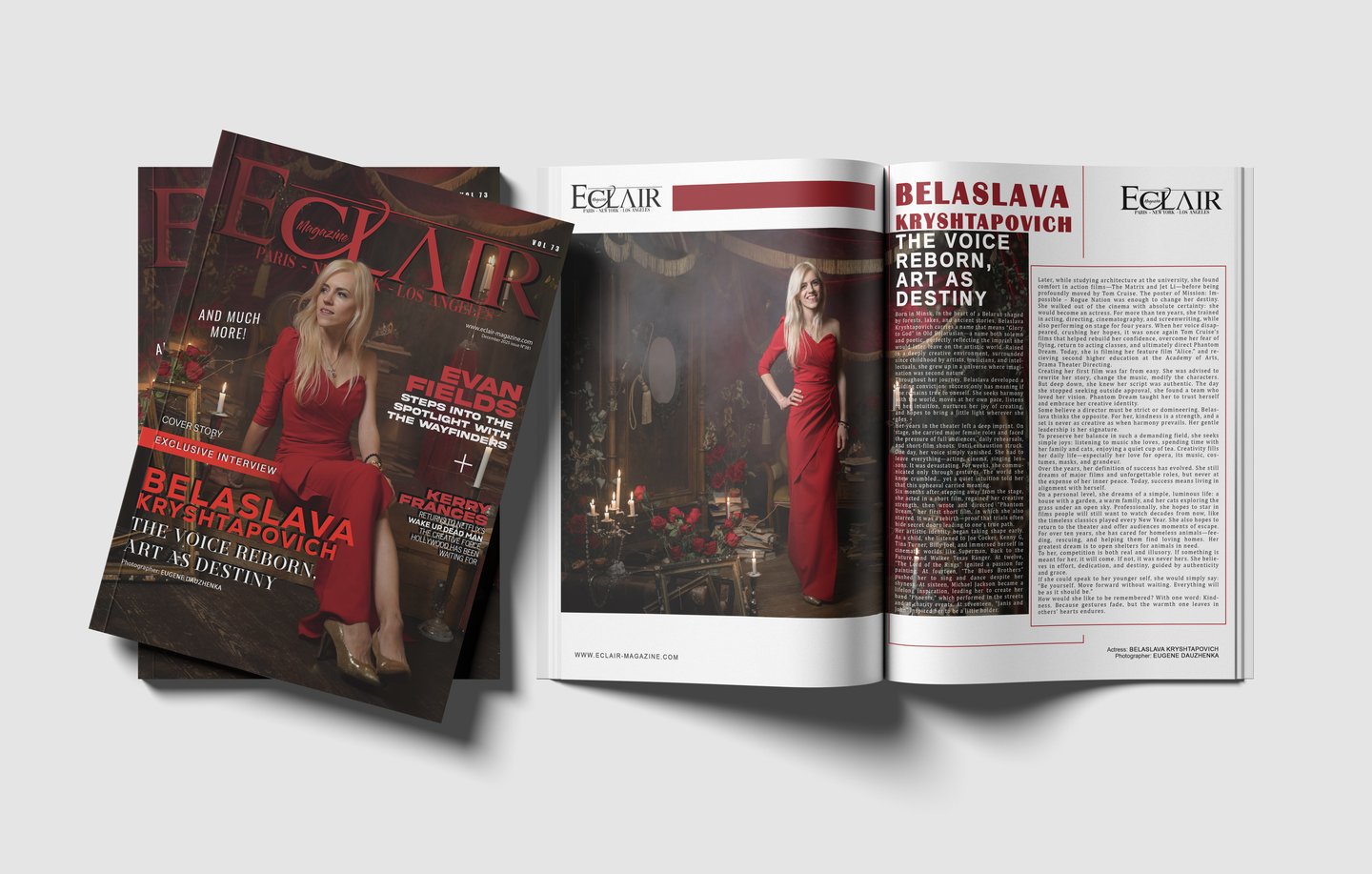
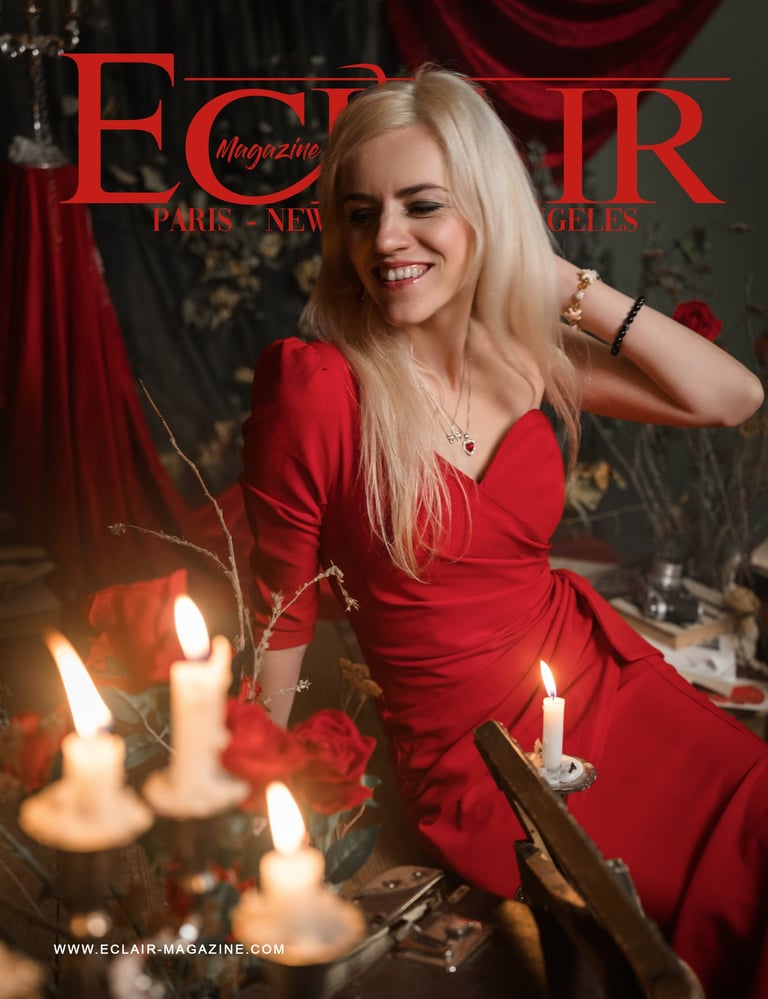
Actress: Belaslava Kryshtapovich
Photographer: Eugene Dauzhenka
9. “Alice,” your upcoming feature film, seems like an important milestone. What deeper themes or personal truths are you exploring through this project that reflect who you are today?
I try not to think of it as one massive project, but rather focus on the single small scene we are shooting today and over the next few days. I realized that if I look at the entire project all at once, I simply won’t be able to make it. The film’s core message is that you must not be afraid to be yourself or afraid to take risks. It speaks to the importance of listening to your intuition and the signs the Universe provides, and the consequences of ignoring them. In a way, I suppose I am Alice, trying to hear myself, my inner voice.
10. Your dream of building animal shelters reflects profound compassion. How do you envision combining your career in cinema with your long-term mission for animals, and what legacy do you hope this parallel path will leave behind?
I don’t think about how I will combine these two paths, just as I haven’t thought about it for the last ten years. Yes, it can sometimes be both morally and physically difficult, especially when cats require a lot of attention and time for treatment. I simply want to help as many homeless animals as possible so that their lives become easier and better.
Quality, not quantity
We have made quality our habit. It’s not something that we just strive for – we live by this principle every day.