
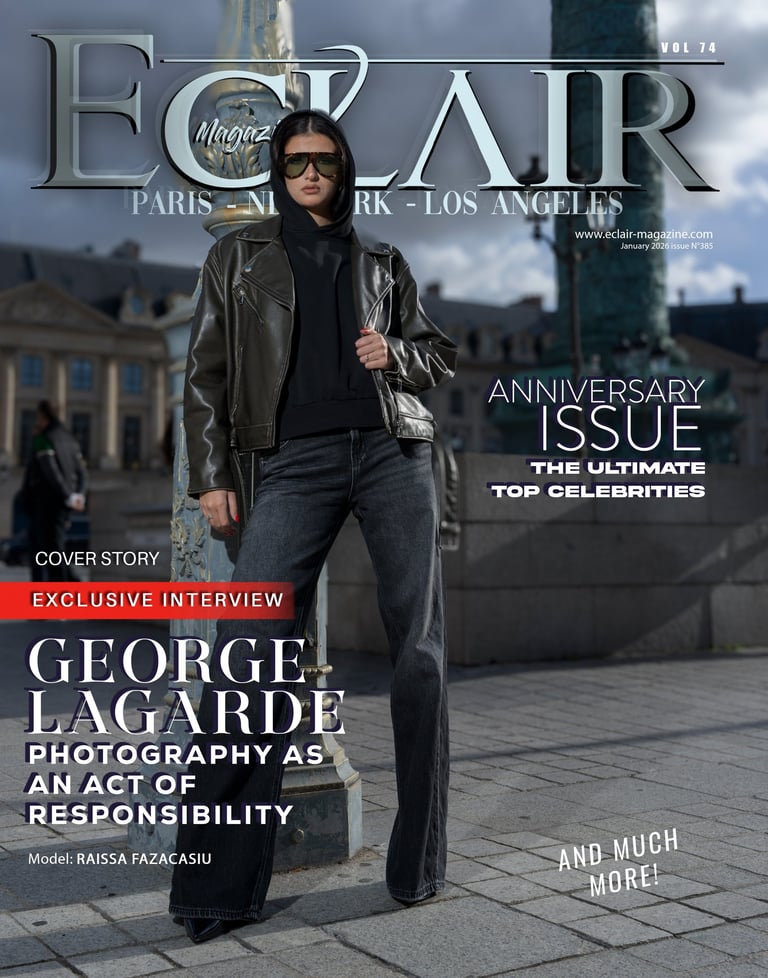
EXCLUSIVE INTERVIEW
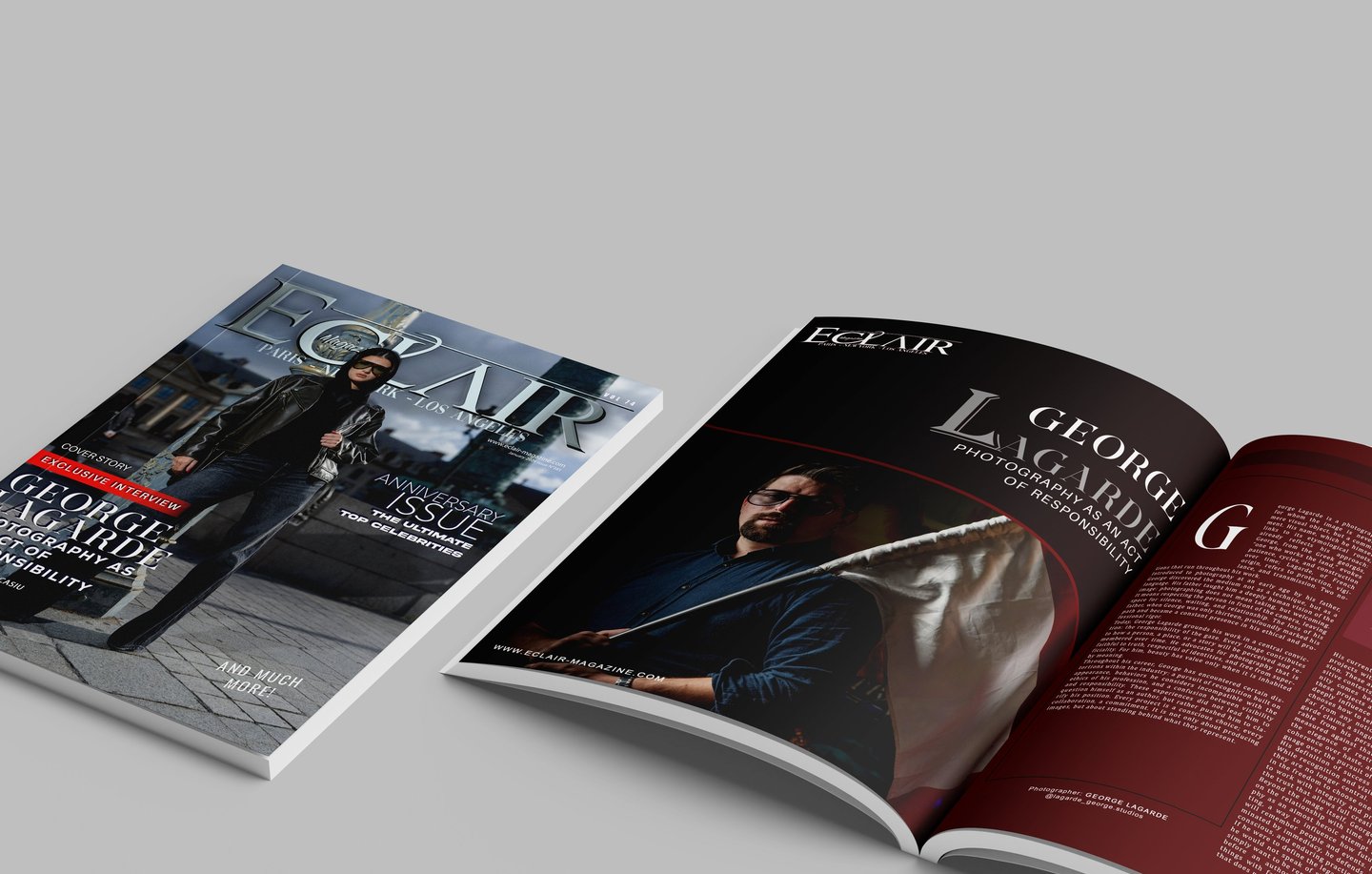
George Lagarde — Photography as an Act of Responsibility
Conducted by Guillaume Jean Lefebvre
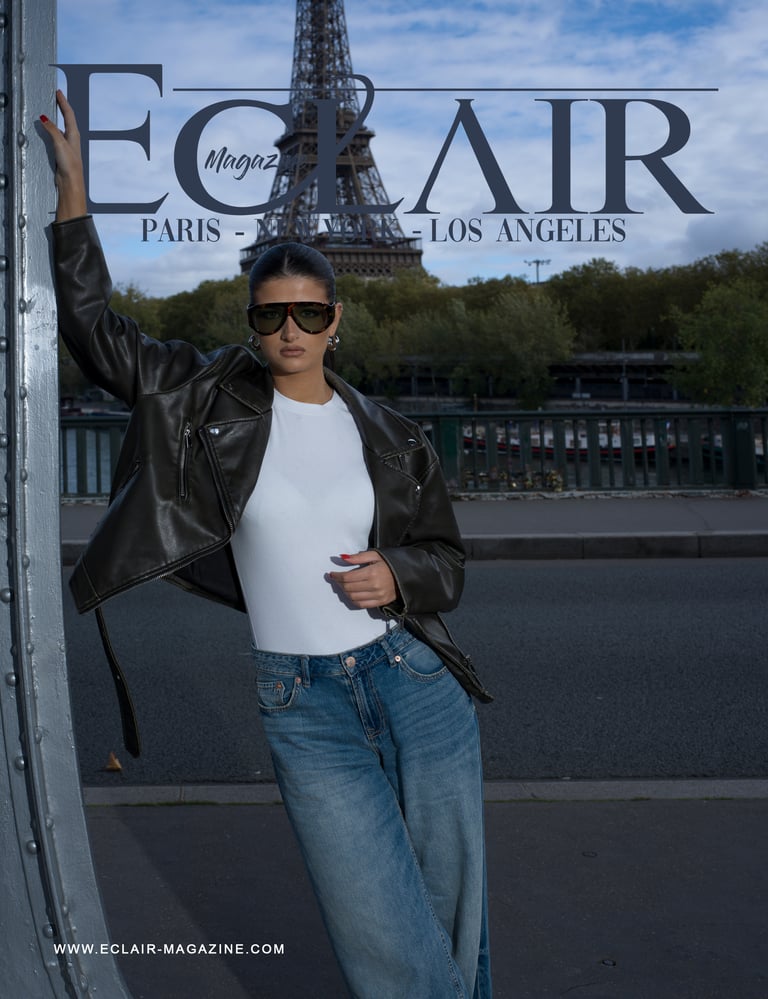
1. Your work often emphasizes responsibility over aesthetics. How do you personally determine the ethical boundary of an image before you create it?
Before anything else, I ask myself if it is right to take the picture.I try to understand whether a photograph can tell a story without taking something away from the person in front of me.
For me, the ethical boundary begins with respect.
2. You describe photography as a way to resist time. How has your relationship with time evolved?
I have never been guided by urgency.
I have always experienced photography as a way to take my time, to observe, to wait.
Over the years, I have learned to trust waiting even more.
For me, photography is not about stopping time, but about entering it with respect.
3. In a world saturated with images, what makes a story deserve to be photographed?
A story deserves to be photographed when I feel it is true, even if it is quiet.
I am interested in stories that speak softly, but remain.
4. How does the loss of your father continue to shape your creative discipline today?
My father taught me seriousness in work, care, and respect for what is being done.
These values have stayed with me and still guide the way I work today.
5. When you accept a project, what signals tell you that it aligns with your identity?
I accept a project when I feel I can work with sincerity.
If I sense that I would need to force a story or oversimplify it, I know it is not right for me.
6. You reject the idea of competition. How does this perspective influence your positioning?
I have never experienced photography as a competition.
Everyone has their own language, their own time, their own path.
I prefer to focus on mine.
George Lagarde is a photographer for whom the image is never a mere visual object, but a commitment. His name, which he himself links to its etymological roots, already reflects his approach: George, from the Greek geōrgós, “one who works the land,” evokes patience, cycles, and construction over time; Lagarde, of French origin, refers to protection, vigilance, and transmission. Two notions that run throughout his work.
Introduced to photography at an early age by his father, George discovered the medium not as a technique, but as a language. His father taught him a deeply human vision of the image: photographing does not mean taking, but welcoming. It means respecting the person in front of the camera, leaving space for silence, waiting, and relationship. The loss of his father, when George was only thirteen, profoundly marked his path and became a constant presence in his ethical and professional rigor.
Today, George Lagarde grounds his work in a central conviction: the responsibility of the gaze. Every image contributes to how a person, a place, or a story will be perceived and remembered over time. He advocates for photography that is faithful to truth, respectful of identities, and free from superficiality. For him, beauty has value only when it is inhabited by meaning.
Throughout his career, George has encountered certain distortions within the industry: a pursuit of recognition built on appearance, behaviors he considers incompatible with the ethics of his profession, and a confusion between visibility and responsibility. These experiences did not lead him to question himself as an author, but rather pushed him to clarify his position. Every project is a conscious choice; every collaboration, a commitment. It is not only about producing images, but about standing behind what they represent.
His current work is increasingly oriented toward projects with a strong social and human dimension. These are works built from encounters, sensitive contexts, and ordinary stories, where humanity comes before the event itself. Even when these projects are still in progress, they already deeply influence the way he looks, listens, and chooses how to tell stories.
Far from any notion of competition, George Lagarde claims a singular path. His vision is inseparable from his personal history and cannot be measured against that of anyone else. He favors the elegance of restraint over demonstration, coherence over haste, and fidelity to his own language over the pursuit of external validation.
His definition of success has evolved over time. While recognition and visible results still matter, they are no longer central. True success now lies in the freedom to choose one’s projects, to say no, to work with integrity and presence, and to earn the trust that allows full creative autonomy.
Beyond the image itself, George Lagarde reflects on the relationship with time. He sees photography as an almost heroic attempt to resist forgetting, a way to influence how future generations will remember people and events. In a world dominated by immediacy, he defends a slower, more conscious, and enduring practice.
If he were to define the legacy he wishes to leave, he would not speak of status or titles. He would simply want to be remembered as “George”: a man before an author, someone who sought to do things with fairness, respect, and truth. A gaze that does not seek to impose itself, but to remain.
INTERVIEW
7. What responsibilities do you feel once these stories enter the public eye?
When a story is shared, I feel responsible for having told it in the most respectful way possible.
I know it is no longer only mine, and this requires attention and measure.
8. Silence and waiting are central to your process. How do you protect them?
I try to protect these spaces by carefully choosing the projects I accept.
Sometimes this also means saying no.
9. How do you balance recognition with your refusal of superficial visibility?
Recognition matters, but I do not want to be everywhere.
I prefer that my work is encountered, not just seen.
10. If photography were taken away from you tomorrow, what part of your identity would remain unchanged?
My way of observing and being with people would remain.
Photography is a tool, but it is not everything that I am.
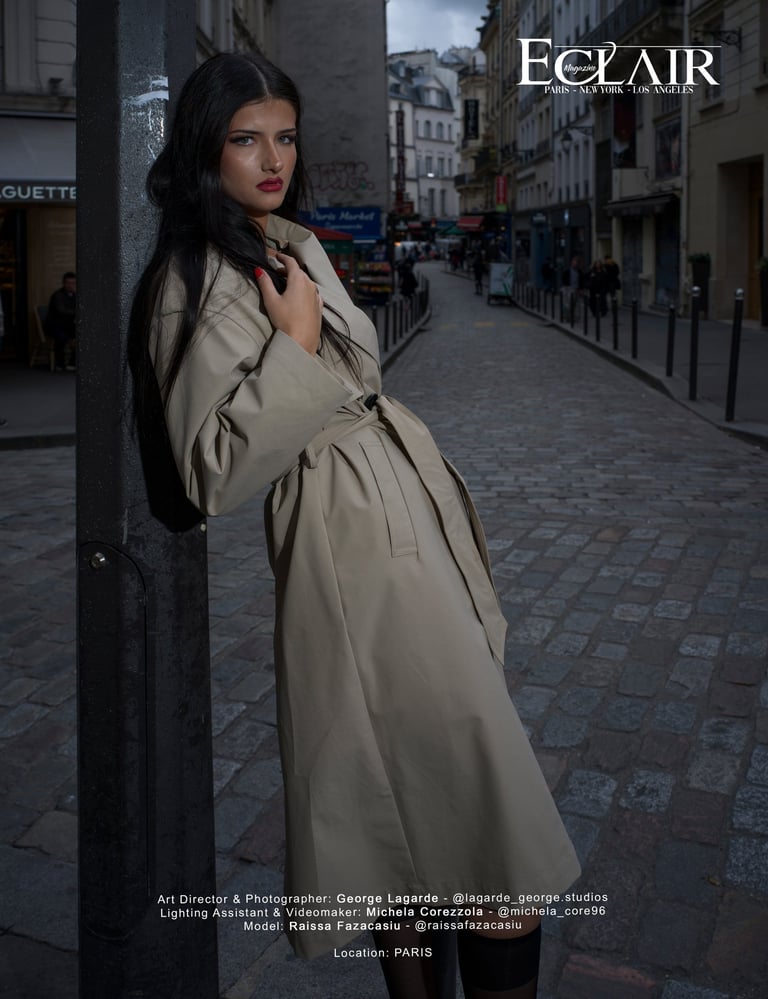
Art Director & Photographer: George Lagarde - @lagarde_george.studios
Lighting Assistant & Videomaker: Michela Corezzola - @michela_core96
Model: Raissa Fazacasiu - @raissafazacasiu
Location: PARIS
Quality, not quantity
We have made quality our habit. It’s not something that we just strive for – we live by this principle every day.