
EXCLUSIVE INTERVIEW
IEVA UNDA
THE LEGACY OF ART, THE STRENGTH OF INTUITION
Conducted by Guillaume Jean Lefebvre
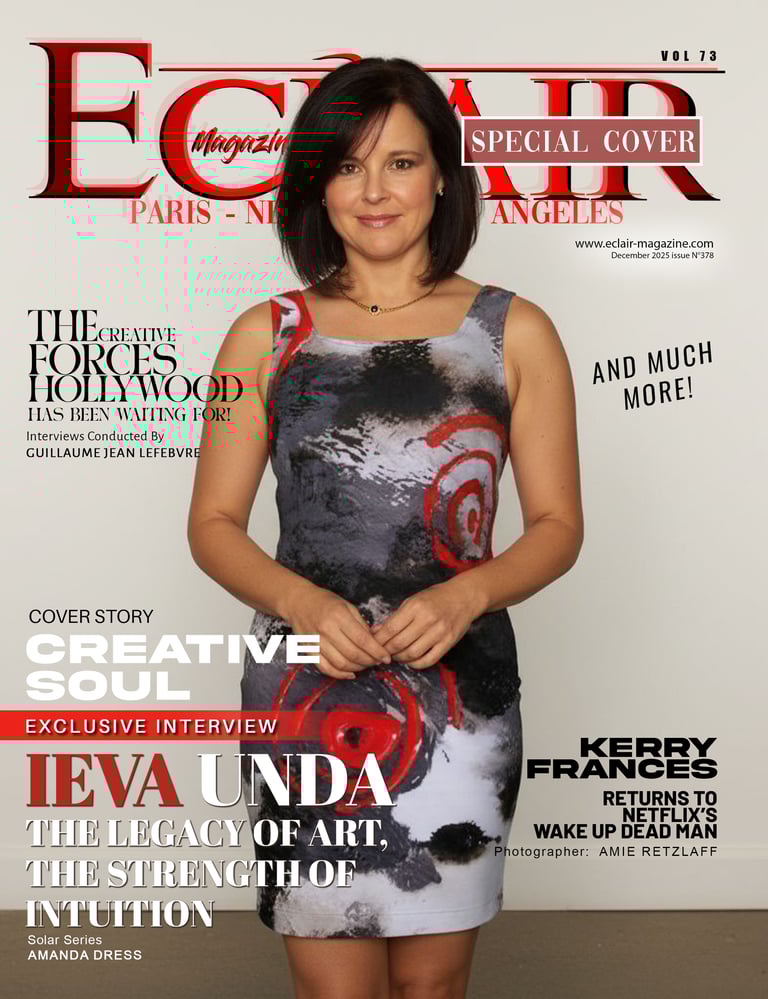
1. Your work seems deeply rooted in your father’s artistic legacy. How do you distinguish your own creative identity today while still honoring that heritage?
My dad's paintings are lyric, mostly peaceful, full of a perfect range of tones and colors who are changing, moving the right direction and merging together.
In many interviews dad said that he is proud and happy that I am continuing his way - in watercolors, not any other technique, but my artworks are more dramatic, abstract and expressive.
I was always impressed by his paintings and asked many times when I would be able to paint like him.
Dad smiled and answered with the little joke: "When will I be as old as he..."
Watercolors - it's not an easy technique as lots of people think. You never know how your painting will look at the end, because watercolors often "go their own way" and it's not easy to control them.
Watercolors - that's a technique where you have to learn and experiment every day.
And for this reason lots of paintings find their way in the trash can, because they are not the way I like and can't be shown.
But it will always be watercolors, honoring my dad and his memory.
2. Could you describe your creative process—from the first spark of inspiration to the completion of a piece or garment? What stages are essential for you?
I think that two identical artists don't exist, so I can say the same about my art - from ideas, paintings until the final product is done. I don't approve of about half of clothing images, because I want to see the final product perfect, sometimes I make fun of it, for example flowers
can't be on the dress where it's not supposed to be.
Would like to mention that I like to do photography, mostly landscapes and seascapes, tapestry images also can be seen in my clothing line.
The entire creation process starts with the painting or photography and as an artist, I have to visualize the final product before it has been made.
I really enjoy working with Le Galeriste, a company based in Montreal, Canada and I would like to mention that all clothes are made by order, one by one, and that's one more reason why I am so proud of my clothing line.
I hope that people will understand why production times are longer, because garments are made by order and if someone orders clothes today, they can't receive it by tomorrow.
I think this is the main reason that makes these clothes look unique and different from others.
Spark can come from anywhere - I wake up at night and see interesting shadows on the wall, I take a photo and after some time photography turns into clothes. Or driving a car I see the colorful autumn fields, I come home and watercolors turn my memories into artwork and after - to unique and original clothes.
3. In such a competitive art and fashion market, how do you make strategic decisions that keep your work authentic while remaining commercially appealing?
I would like to call it a "Signature Style", based on my vision. Each of my paintings, tapestry, and photography is unique, so unique will be each piece of my clothing line.
"When Art becomes Fashion and Fashion becomes Art".
4. How do you navigate the balance between creative freedom and the expectations of the public, galleries, or clients when developing a new collection or piece?
My clothing line is completely different and unique and I understand that these clothes are not for everyone. I would like to say, for people who like to experiment with what they are wearing, who are not afraid, who also likes to receive compliments about their look, answer many questions where these clothes are coming from. These clothes are for people who are brave, who like changes and who like to look completely different from others.
I love to see people wearing my clothes, but I am watching "from a distance", I think, clothes have to speak by themselves
Born in Latvia and having arrived in the United States in May 2002, Ieva Unda carries a name she embraces with pride — a name that reflects her roots, her history, and the singular path that shaped her into the artist and creator she is today.
From an early age, Ieva’s world was shaped by a decisive figure: her father, Janis Unda, a renowned Latvian watercolor artist. More than a parent, he was her first and greatest teacher — the one who introduced her to museums, painting, and art history, and who taught her a way of seeing and understanding the world. With him, she learned that art is a demanding journey guided by doubt, self-reflection, and the constant desire to keep moving forward. He instilled in her the importance of questioning oneself, never resting on success, and always advancing — principles that continue to guide her both personally and professionally.
These lessons forged in Ieva a profound resilience. Moments of doubt are frequent, yet never paralyzing. She faces them with the philosophy inherited from her father: every experience, even the difficult ones, holds something to learn. This mindset continually fuels her creativity and her ability to reinvent herself.
People sometimes misunderstand her — her need for solitude can be mistaken for distance or pride. But Ieva knows herself well. Taking time alone allows her to regain balance, refocus, and return with renewed inspiration. She nurtures her emotional well-being through walks, trips, music, books, or simply by reconnecting with meaningful moments in her life.
Creativity, for Ieva, is not confined to a single domain: it is a way of living. In a world where new influences emerge every day, fashion, art, and cultural shifts nourish her imagination. These inspirations shape her work, whether through deeply expressive pieces or more daring and unconventional creations.
Her definition of success remains intentionally humble and in constant evolution. Ieva appreciates the positive feedback she receives, yet she refuses to see any piece as definitively finished. This clear-eyed self-expectation is the engine that keeps her progressing, creating, and growing.
The legacy she hopes to leave behind is rooted in the values passed down by her father: honesty, continuous learning, and self-awareness. She aspires to a path where doubt is not a weakness, but a source of authenticity and strength.
When facing challenges or competition, she approaches them with openness and humility. She listens, observes, and learns from other artists, always seeking enrichment rather than rivalry. And if she could speak to her younger self at the beginning of her journey, her message would be simple: Move faster. Don’t be afraid.
Today, Ieva Unda continues to express her vision through her creative work, guided by a name she cherishes and a determination shaped since childhood. A name she hopes will endure — associated with honesty, sensitivity, and the courage to stay true to oneself.
One word she wants to be remembered by?
Ieva Unda. Because her name already tells her entire story.
INTERVIEW
5. Your story reflects a strong self-discipline inherited from your father. How does this discipline influence the way you work, plan, and evaluate your professional projects?
Right now, as my parents are not a life any more, it's much harder.
I ask myself many questions many times before showing my new artwork to others, because before I can always ask my dad, after he passed away, I can question my mom, for advice. My dad was the best and honest person who I knew when it came to show or discuss my new paintings. And we even had long discussions about his own paintings.
Have to mention that I didn't agree with him many times and sometimes we argued for hours, for example about something that was red, but in our arguing process turned green to him and white to me, after a while we changed colors, but it was never red.
But it was a happy argument and as always, a good lesson for me. Only sad thing is that then I didn't appreciate that, I didn't realize that one day there will be a big hole with a million questions from me and no answers...I understood that many years later. But probably it happens to many people. We don't appreciate something when it's here, next to us till it's gone...
Now I have to be much stronger, because I don't have my parents' backup any more.
6. Art and fashion evolve rapidly. How do you ensure you stay innovative while maintaining a clear artistic signature that sets you apart?
Art and fashion world is so dynamic and fast changing. So I think it's really important and necessary not to lose identity and foundation that comes from my parents, from my home country, traditions and culture, but at the same time see and understand what happens in the world, fashion industry, read, watch and analyze.
7. Is there a defining moment in your career—an exhibition, a collection, a meeting—that shifted your perspective on your art or your professional direction?
The first exhibition was held in 1994 in Aalen, Germany with my father and other artists from Latvia. It was great and the first biggest international exhibition experience.
It gave me a good push to move forward.
5. Your story reflects a strong self-discipline inherited from your father. How does this discipline influence the way you work, plan, and evaluate your professional projects?
Right now, as my parents are not a life any more, it's much harder.
I ask myself many questions many times before showing my new artwork to others, because before I can always ask my dad, after he passed away, I can question my mom, for advice. My dad was the best and honest person who I knew when it came to show or discuss my new paintings. And we even had long discussions about his own paintings.
Have to mention that I didn't agree with him many times and sometimes we argued for hours, for example about something that was red, but in our arguing process turned green to him and white to me, after a while we changed colors, but it was never red.
But it was a happy argument and as always, a good lesson for me. Only sad thing is that then I didn't appreciate that, I didn't realize that one day there will be a big hole with a million questions from me and no answers...I understood that many years later. But probably it happens to many people. We don't appreciate something when it's here, next to us till it's gone...
Now I have to be much stronger, because I don't have my parents' backup any more.
6. Art and fashion evolve rapidly. How do you ensure you stay innovative while maintaining a clear artistic signature that sets you apart?
Art and fashion world is so dynamic and fast changing. So I think it's really important and necessary not to lose identity and foundation that comes from my parents, from my home country, traditions and culture, but at the same time see and understand what happens in the world, fashion industry, read, watch and analyze.
7. Is there a defining moment in your career—an exhibition, a collection, a meeting—that shifted your perspective on your art or your professional direction?
The first exhibition was held in 1994 in Aalen, Germany with my father and other artists from Latvia. It was great and the first biggest international exhibition experience.
It gave me a good push to move forward.
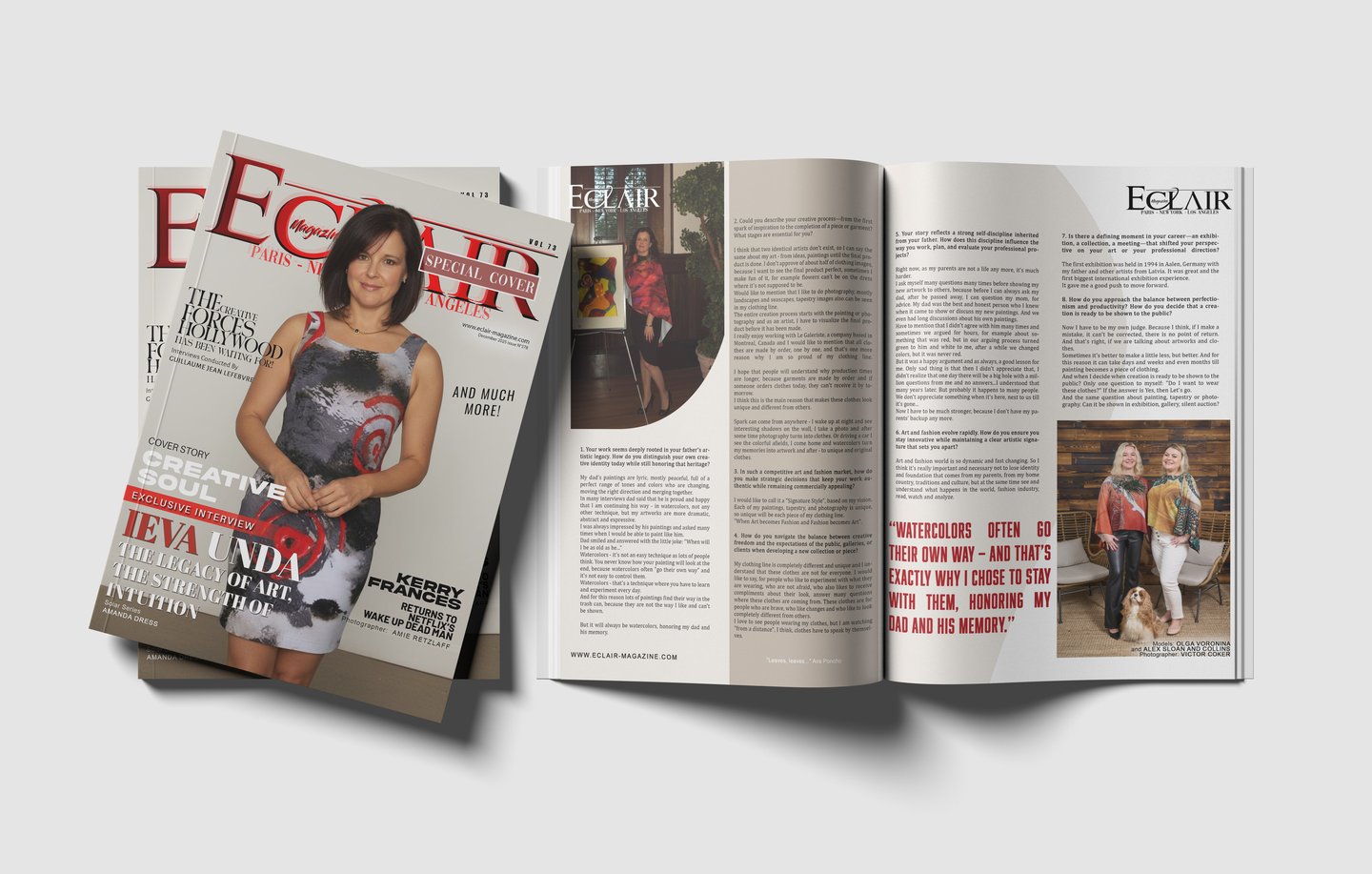
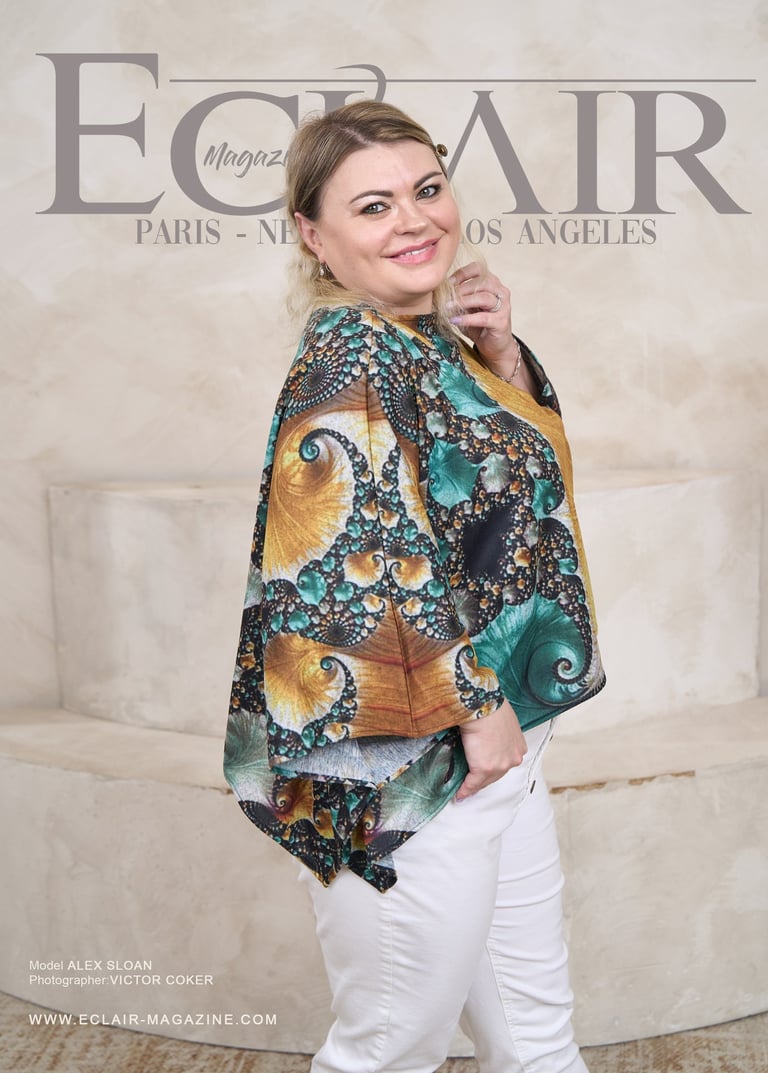
Model: Ieva Unda "Leaves, leaves..." Ava Poncho
Solar Series I - Amanda Dress
Flames II" Victoire Dress
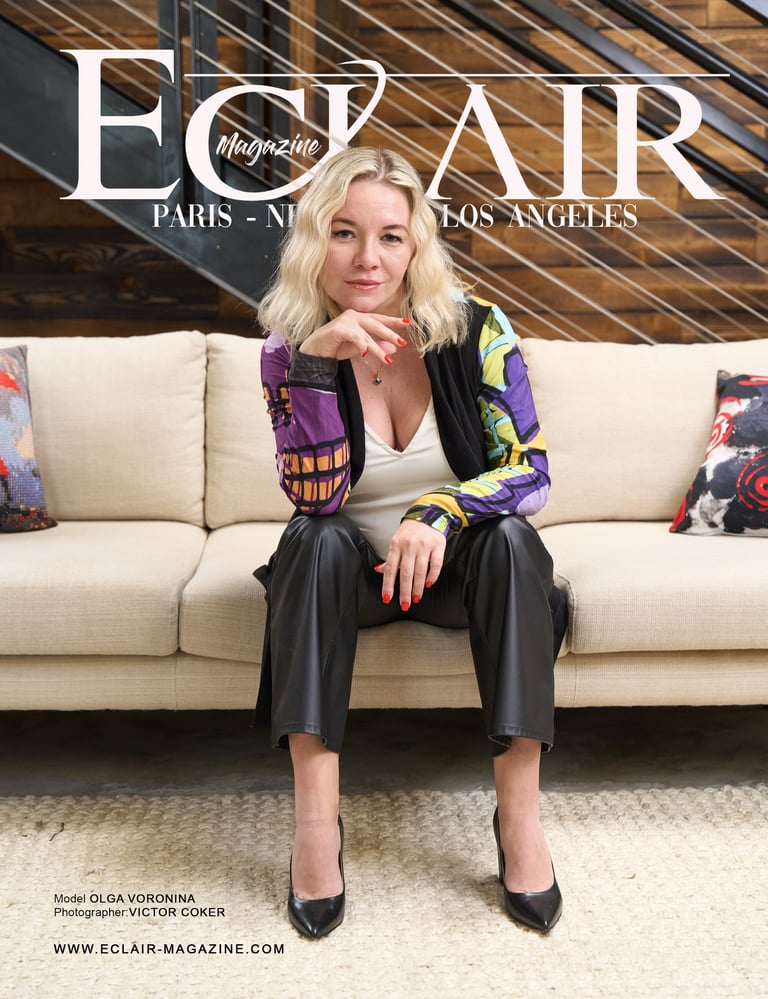
Photographer: Victor Coker
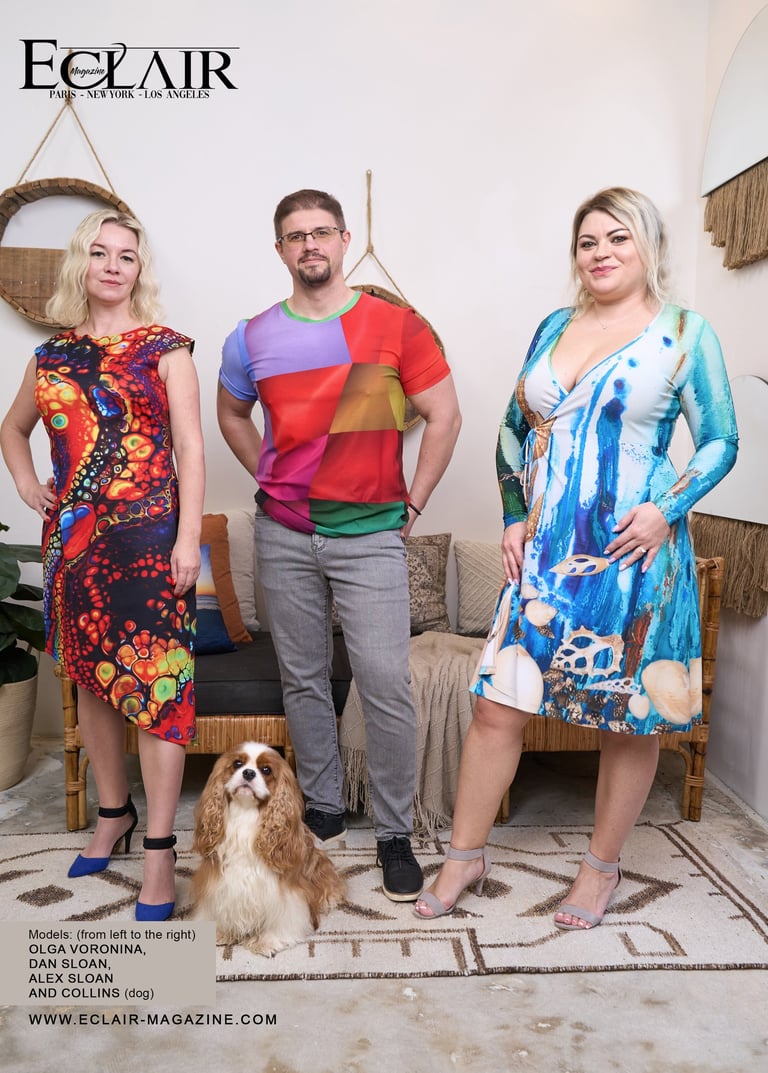
Models: (from left to the right) Olga Voronina, Dan Sloan, Alex Sloan and Collins (dog)
Olga Voronina
Alex Sloan
Olga Voronina
Alex Sloan and Collins
Alex Sloan
Dan Sloan and Alex Sloan
8. How do you approach the balance between perfectionism and productivity? How do you decide that a creation is ready to be shown to the public?
Now I have to be my own judge. Because I think, if I make a mistake, it can't be corrected, there is no point of return. And that's right, if we are talking about artworks and clothes.
Sometimes it's better to make a little less, but better. And for this reason it can take days and weeks and even months till painting becomes a piece of clothing.
And when I decide when creation is ready to be shown to the public? Only one question to myself: "Do I want to wear these clothes?" If the answer is Yes, then Let's go.
And the same question about painting, tapestry or photography. Can it be shown in exhibition, gallery, silent auction?
9. What tools, techniques, or materials play an essential role in your work today, and how does their evolution influence your creativity?
Everything around. Every day is different. But when I started to paint many years ago, my best paintings were made when I was in a bad mood. Sounds silly, right? Good and happy days weren't days for creativity and art. And the same with weather. When it was raining, thundering and lightning, paintings were so expressive and full of bright colors.
Quality, not quantity
We have made quality our habit. It’s not something that we just strive for – we live by this principle every day.