
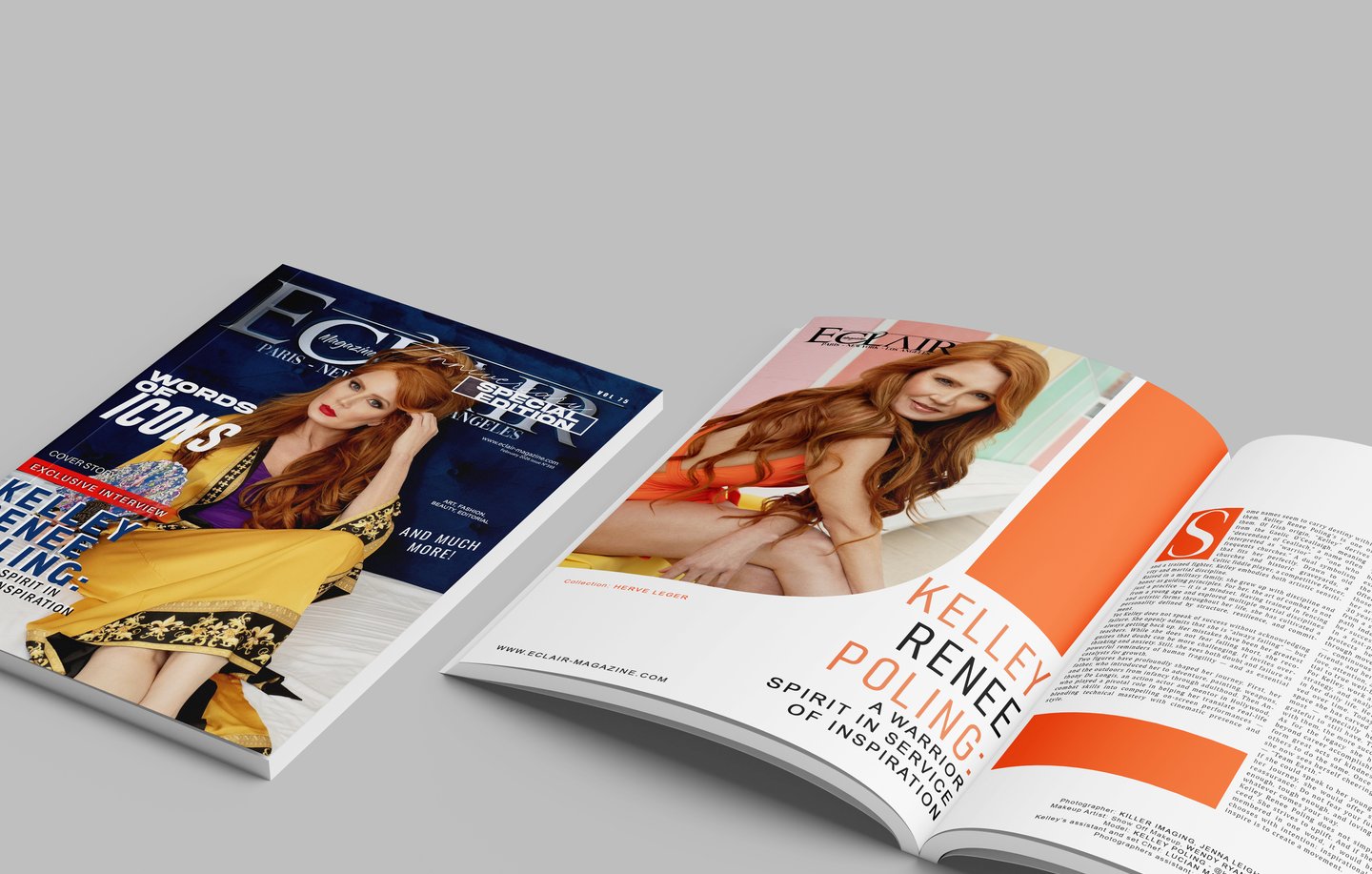
EXCLUSIVE INTERVIEW
Kelley Renee Poling: A Warrior Spirit in Service of Inspiration
Conducted by Guillaume Jean Lefebvre
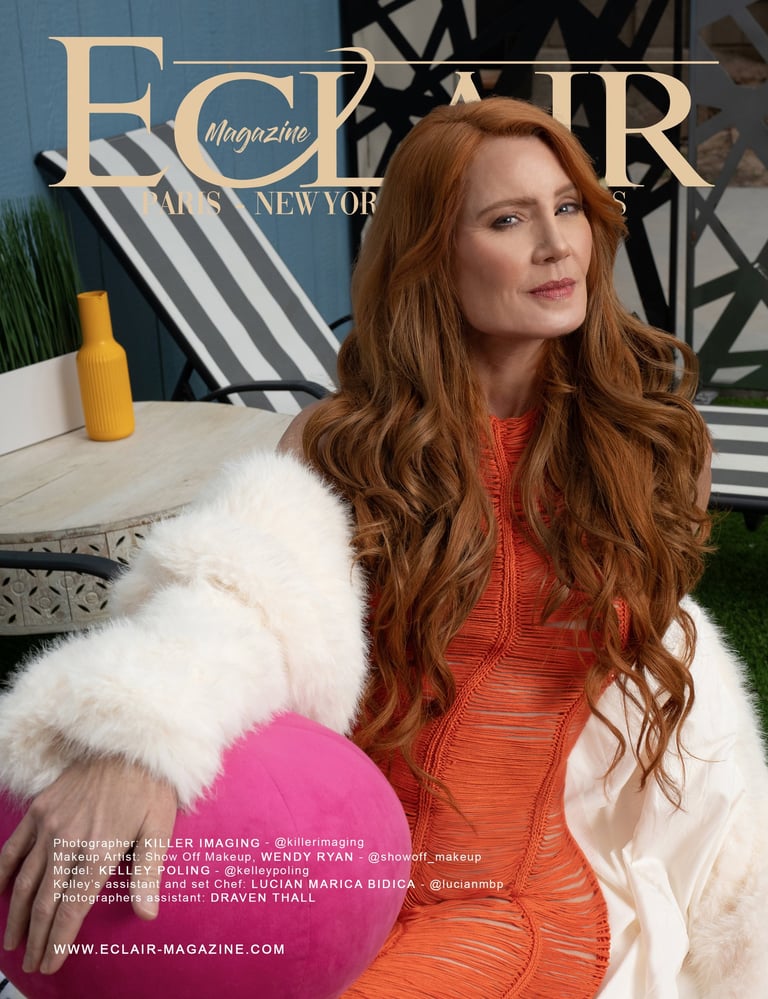
Your career spans corporate leadership, martial arts mastery, and on-screen performance. How did you strategically navigate such distinct professional worlds without losing your identity?
Navigating a corporate career, martial arts, and entertainment is my identity. I am also a musician — I play the violin. I’m a bit of a workaholic with a need to always be better than the day before. There is a common thread to all of these different aspects of me: discipline and drive with a splash of wanting to entertain.After nearly 30 years in the corporate environment in New York, what internal shift pushed you toward a more creative and performance-driven path?
I have always been creative, but a business-savvy mind is necessary for the entertainment business also. Having this knowledge has made me better at being an Executive Producer as well as an artist. It’s good to know how the money flows through projects and to make sure everyone makes money in the end. The push came when my company moved me to Los Angeles for corporate work and I landed a role as a fencing instructor in a film. The Director also let me play my violin. It was a dream job.How has your background in fencing and martial disciplines shaped the way you approach negotiations, leadership, and long-term career planning?
I love strategic thinking. Fencing requires anticipating an opponent's moves and devising counter-strategies. This translates well into negotiations, where understanding the other party's perspective and planning your responses is very important. Just as in fencing, where timing is essential for executing a successful move, effective business negotiation often involves knowing when to speak, listen, or make concessions.
Martial disciplines teach me to remain calm in high-stress situations, allowing me to think clearly and make better decisions during negotiations.
The rigorous training required in martial arts gives me a strong sense of discipline, which is essential for effective leadership. It instills a commitment to personal growth and helps with the development of others.
Practicing martial arts often involves studying my opponents and understanding their motivations. This skill enhances my ability to connect with team members and adopt a supportive and collaborative environment.
My training in combat sports inherently involves understanding conflict. This helps me navigate and resolve conflicts within my teams and supports harmony and productivity. It also helps me set goals for improvement, which is good for advancing my career. The challenges in martial arts often make me face setbacks that I need to overcome. This has prepared me to adapt to changes in my career and remain strong when things do not go my way. Engaging in fencing or martial arts always involves being part of a community for me. This has helped me build my personal and professional network. In these times, it’s good to have friends.
Some names seem to carry destiny within them. Kelley Renee Poling’s is one of them. Of Irish origin, “Kelley” derives from the Gaelic O’Ceallaigh, meaning “descendant of Ceallach,” a name often interpreted as “warrior” or “one who frequents churches.” A dual symbolism that fits her perfectly. Drawn to old churches and historic graveyards, a Celtic fiddle player, a competitive fencer, and a trained fighter, Kelley embodies both artistic sensitivity and martial discipline.
Raised in a military family, she grew up with discipline and honor as guiding principles. For her, the art of combat is not just a practice — it is a mindset. Having trained in fencing from a young age and explored multiple martial disciplines and artistic forms throughout her life, she has cultivated a personality defined by structure, resilience, and commitment.
Yet Kelley does not speak of success without acknowledging failure. She openly admits that she is “always failing” — but always getting back up. Her mistakes have been her greatest teachers. While she does not fear falling short, she recognizes that doubt can be more challenging. It invites overthinking and anxiety. Still, she sees both doubt and failure as powerful reminders of human fragility — and as essential catalysts for growth.
Two figures have profoundly shaped her journey. First, her father, who introduced her to adventure, painting, weapons, and the outdoors from infancy through adulthood. Then Anthony De Longis, an action actor and mentor in Hollywood, who played a pivotal role in helping her translate real-life combat skills into compelling on-screen performances — blending technical mastery with cinematic presence and style.
A deeply emotional turning point came when she became a regular on a children’s television show. As her following grew, she realized that young girls were looking up to her for guidance and inspiration. The responsibility was immense. Since then, she has been intentional about setting a clear and honest example. To her, teaching — in any form — is one of the most powerful and important roles on the planet.
Often underestimated, Kelley continues to surprise those who might not expect her background. Beyond her artistic and athletic pursuits, she spent nearly 30 years in the corporate world in New York. Coming from a small town in Cleveland, Ohio, she built her path independently, taking full ownership of both her successes and her mistakes.
In a fast-paced and competitive environment, she protects her mental and emotional well-being through movement — running, fencing, martial arts — continuous learning, and meaningful time with friends and her dog, Byron. She believes that giving love, attention, and help where it is needed is essential to true well-being.
For Kelley, work and creativity are inseparable. Art, strategy, and analytical thinking coexist seamlessly in her daily life. Her definition of success has evolved over time. Today, it is measured by how much space she has carved out for the people who matter most — especially her parents, whom she feels grateful to still have. The more time she can spend with them, the more successful she feels.
As for the legacy she hopes to leave, it extends beyond career accomplishments. She aspires to perform great acts of kindness and charity, inspiring others to do the same. Once a cheerleader in spirit, she now sees herself cheering for something greater — “Team Earth.”
If she could speak to her younger self at the start of her journey, she would offer simple but powerful reassurance: Do not fear your future. You are smart enough, tough enough, and loving enough to handle whatever comes your way.
Kelley Renee Poling does not simply strive to succeed. She strives to uplift. And if she were to be remembered in one word, it would be the one she chooses with intention: inspirational — because to inspire is to create a movement.
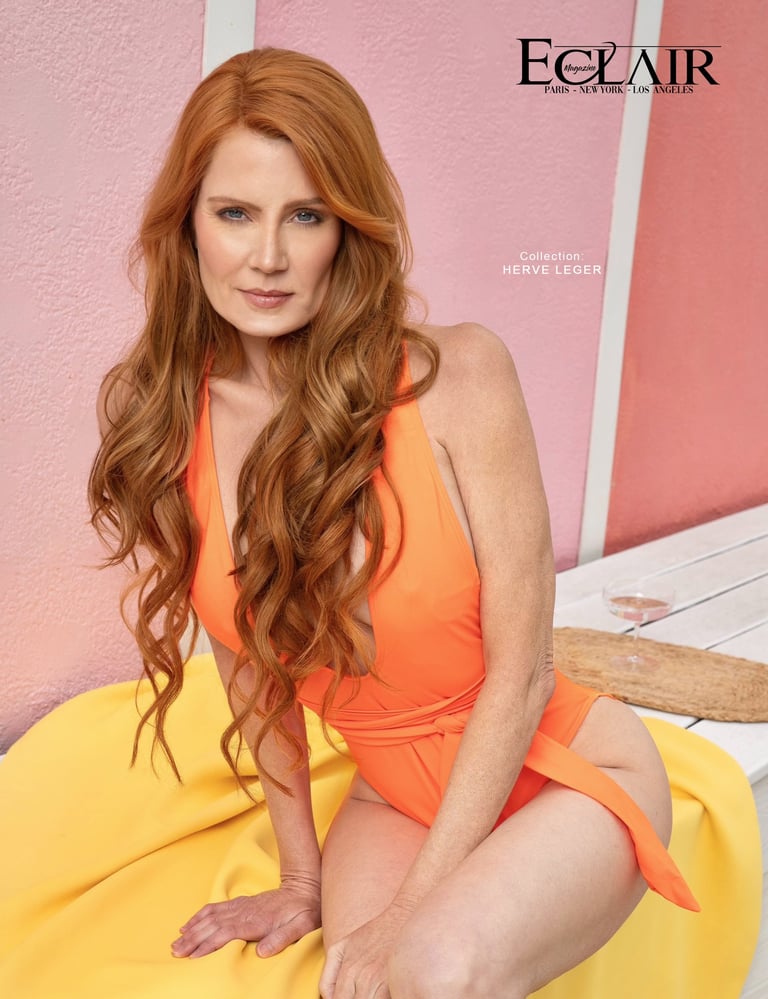
INTERVIEW
When transitioning your real-life combat skills to the screen, what were the most challenging technical or psychological adjustments you had to make?
Ooooh… my gosh. I had to go from wanting to “kill someone/hit my target” to learning to work around my screen partner and put them in an imaginary bubble. This was hard for me. I’ve been trained to execute the hit since I was a little girl. Now I am told not to hit my mark, but to make it look like I did. This is an intricate balance of psychology and technical precision that I had to relearn. Each time I perform for the screen I say to myself, “I hope this doesn’t mess up my competition,” and every time I have a competition, I say to myself, “I hope I don’t hurt my scene partner next time.”In an industry that often typecasts talent, how have you positioned yourself to avoid being limited to one archetype?
I’m still working on that. I am usually cast as “Mom” — which is a very prestigious role — but an action spy mom would be way more fitting.You’ve spoken about being underestimated. How have you turned that perception into a professional advantage?
I win when they aren’t looking — same as in martial arts.Mentorship played an important role in your evolution. At what point did you realize you were no longer just a student — but becoming a mentor yourself?
I will always be a student until the day I die, but I realized I had to be more than that when I traveled for work and children recognized me. I was staying at the Palace in New York City and a little boy came screaming across the lobby, “Look Daddy! It’s the mean lady from Totally Studios!!!” He rushed over to open the door for me. I knew then that I had to behave myself. Kids are watching.As someone who balances analytical thinking with creativity, how do you decide which projects align with your long-term vision versus short-term opportunity?
Short-term visions are just small achievements leading to my long-term goal. My road has been paved with short-term wins. They took me sideways and backwards sometimes, but the reason “WHY” I do what I do is always leading the way. I want to be a person who inspires as much as I can while I’m still alive. I want to know my life and efforts made a difference to someone, even if it is only one person.
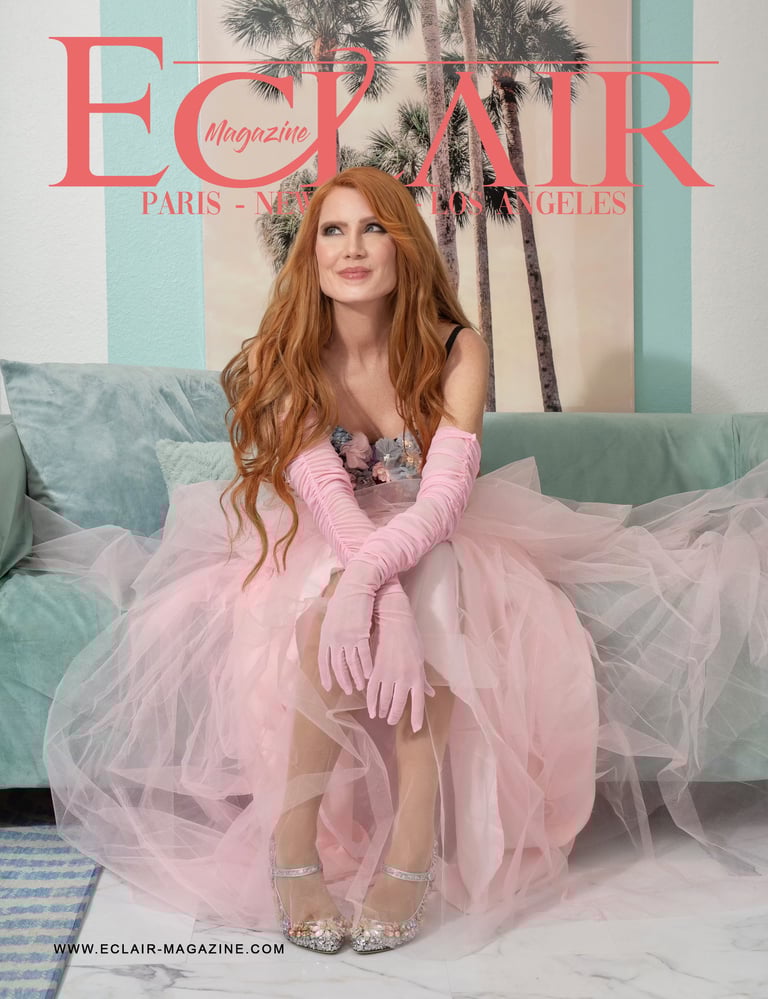
Photographer - Killer Imaging - @killerimaging
Makeup Artist- Show Off Makeup, Wendy Ryan - @showoff_makeup
Model - Kelley Poling - @kelleypoling
Kelley’s assistant and set Chef - Lucian Marica Bidica - @lucianmbp
Photographers assistant: Draven Thall


9. What has been the most defining professional risk you have taken — and how did it reshape your trajectory?
I left my job at “Hawaiian Tropic” many years ago to chase a corporate dream that I was completely unsure of. I loved my job at “Hawaiian Tropic.” I loved my boss, I loved the people who worked there, I loved the people I met through Hawaiian Tropic, and I did not want to leave. I was a bathing suit model and I worked in their office in Licensing. I was having the time of my life. I was offered an opportunity to work in New York City in a prestigious corporate job and I realized I had to take it. The “what ifs...” would have devoured me. From there, I took on a challenging and fruitful career that led me straight back to the entertainment business with more leverage, knowledge, savviness, and financial stability than I ever could have gotten the way in which I was headed.
10. Looking ahead, how do you see your professional identity evolving over the next decade — more performer, more creator, more leader, or a fusion of all three?
I will ALWAYS be a fusion. I always have been. I think my executive producer role will take a bigger part of my career going forward, but I will always be an artist… and a fencer… and a musician.
Quality, not quantity
We have made quality our habit. It’s not something that we just strive for – we live by this principle every day.