
EXCLUSIVE INTERVIEW
Marianna Fricke
Art as a Space of Freedom and Truth
Conducted by Guillaume Jean Lefebvre
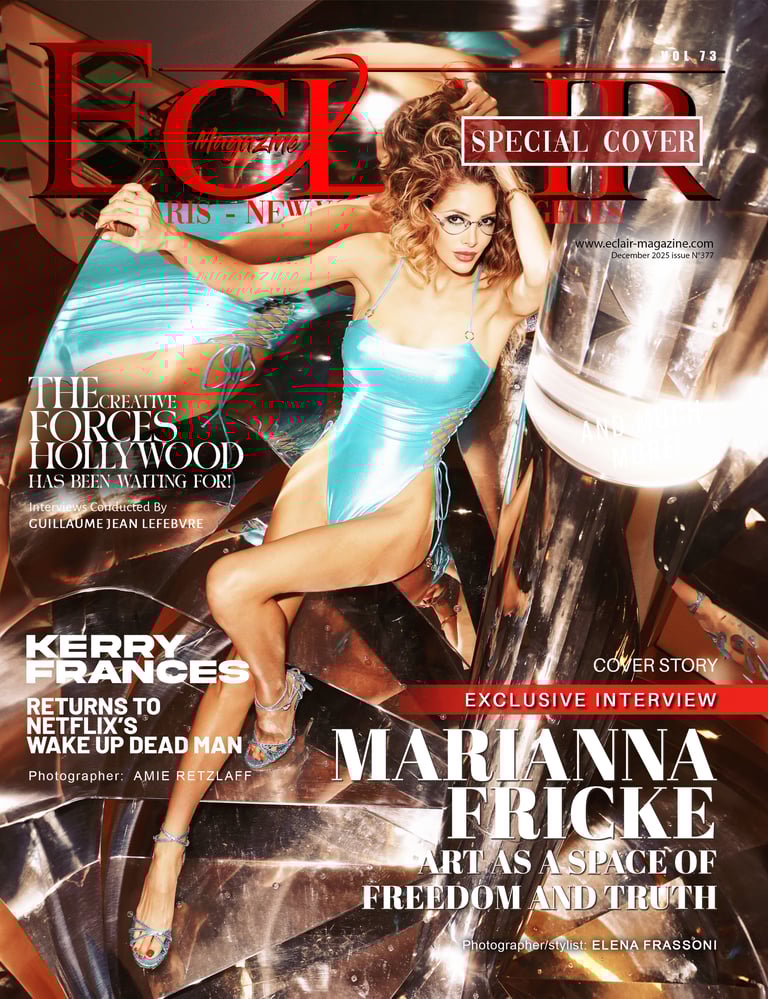
Your work sits at the intersection of intuition, compassion, and a strong visual identity. How do you translate deeply personal values — such as kindness or respect for all living beings — into a visual language?
My work begins with how I treat myself. Learning to love and respect myself hasn’t been an easy process, and that inner journey naturally shapes the way I express kindness and respect through my art. I try to transform those values into images that feel gentle, honest, and human — visuals that invite others to slow down, feel, and connect.
Your shift from art dealing to creating your own work was a pivotal moment. What was the emotional turning point that convinced you your voice needed to take center stage?
My nervous system was in chaos. I was trying to keep up with a lifestyle that simply wasn’t meant for me. At some point, I realized I couldn’t keep living in a way that silenced my true voice. Creating my own work became a necessity — a way to reclaim myself.
You often describe your sensitivity as both a strength and a vulnerability. How does this duality shape your artistic decisions on a daily basis?
I experienced loss very young — especially losing my mother — and only later did I understand the strength required to navigate life with such sensitivity. That duality guides me every day: it allows me to feel deeply, but also pushes me to channel that vulnerability into something meaningful and intentional in my work.
Marianna Fricke carries a name that mirrors her essence. Rooted in the Latin Marius, its blend of strength and softness reflects the duality within her: an artist who is both intuitive and determined, free-spirited and profoundly sensitive. Her path, like her work, is guided by an inner compass grounded in authenticity, respect for all living beings, and unwavering loyalty to her values.
A vegetarian and a devoted animal lover, Marianna places compassion at the heart of her life and artistic practice. Nothing in her world exists in isolation: creativity, honesty, and emotional intuition intertwine to shape the way she sees, feels, and creates. Every choice she makes — personal or professional — comes from this pursuit of harmony with the world around her.
Before exhibiting her own work, Marianna spent years championing the work of others as an art dealer. Stepping into her own artistic expression was a leap: exhilarating yet fragile. She doubted, questioned herself, wondered whether her voice would be heard. Yet these moments of vulnerability proved essential. They revealed a newfound inner strength and a fundamental truth: art is never born from certainty, but from the courage to be oneself.
The figures that nourish her imagination are women who reshaped the cultural landscape. Coco Chanel for her audacity and independence; Yayoi Kusama for her radical freedom and inner discipline. These icons taught her that one can forge a path without compromising artistic identity — and that determination can be its own form of poetry.
Although art history has always accompanied her, it was Pop Art, and especially the work of Roy Lichtenstein, that marked a true emotional turning point. In his work, Marianna discovered not only an aesthetic but a language: one of sincerity, controlled irony, and amplified emotion. This influence is felt in her approach to photography, styling, and her way of transforming everyday life into a vibrant and sensitive visual space.
Often perceived as extroverted, Marianna is in fact deeply introspective. Her expressive nature does not silence her sensitivity; it completes it. A quiet observer as much as a luminous presence, she draws strength from the balance between energy and vulnerability. To stay grounded, she always returns to the body and the physical gesture: sports to clear her mind; ceramics or hand-crafting candles to anchor herself in slowness, presence, and breath.
For Marianna, creativity is not confined to a studio or a project. It permeates her daily life, influences how she dresses, how she moves through spaces, how she captures the world with her camera. One of the most defining moments of her life was her decision to leave the role of intermediary and embrace her identity as a creator — an intimate reconquest, vulnerable yet deeply empowering.
Success, for her, is no longer about external achievements. Today, it is measured through presence, inner growth, and emotional impact. When faced with challenges or the inevitable comparisons within the art world, she stays rooted in her authenticity. Her strength lies in a simple certainty: her voice, her rhythm, and her path belong only to her.
If she were to leave a legacy, she wishes it to be simple: kindness. To be someone who created beauty, treated others gently, and remained faithful to what she deeply loved. To her younger self, she would whisper to stay grateful — for the experiences, the lessons, the relationships… and for the future husband who will become one of her greatest sources of support.
And if a single word were to define Marianna Fricke, it would be the one she embodies just as much as she shares: kindness.
INTERVIEW
Pop Art, especially Roy Lichtenstein, deeply influenced your perspective. Is there a specific artwork that fundamentally changed the way you see the world?
Yes. Hopeless (1963) by Roy Lichtenstein profoundly marked me. The way he portrayed femininity, emotion, and the confrontation with despair opened my eyes to how powerful vulnerability can be when expressed visually.
In an industry where comparison is constant, how do you cultivate your own creative rhythm without being pulled into external noise?
I’ve learned to focus on myself. Sometimes I simply isolate for a weekend — disconnecting from everything — to reconnect with my own rhythm and create without distraction.
You’ve mentioned that you “live artistically” beyond the act of creating. How does this manifest in your relationship to objects, spaces, or even the way you inhabit your everyday life?
I’m constantly creating, even outside the studio. Whether it’s taking care of plants, gardening, or making ceramics, I bring that artistic sensibility into my everyday life. It’s a way of living, not just producing art.
Your definition of success has evolved into something more inner, almost spiritual. Was there a moment that shifted your understanding of what it means to succeed?
Absolutely. I used to make a lot of money and buy things I didn’t need. I was consuming endlessly. But traveling, especially my trip to Japan, changed everything. There, I saw how little people accumulate and how much they value simplicity. It made me realize that success has nothing to do with excess — it’s about inner balance.
You’ve been inspired by strong, visionary women like Coco Chanel and Yayoi Kusama. What part of their legacy do you carry into your own practice?
Their perseverance deeply inspires me. They kept creating, even in a world — especially the art world — that often favors men. That determination is something I carry with me consciously and unconsciously.
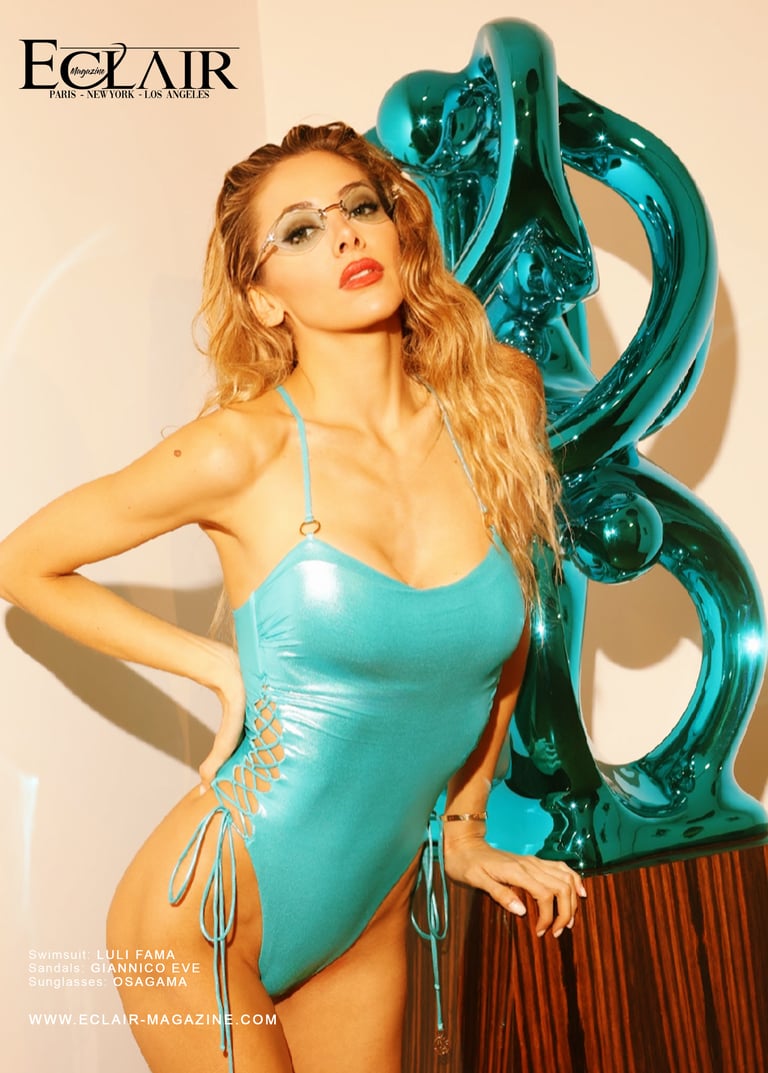
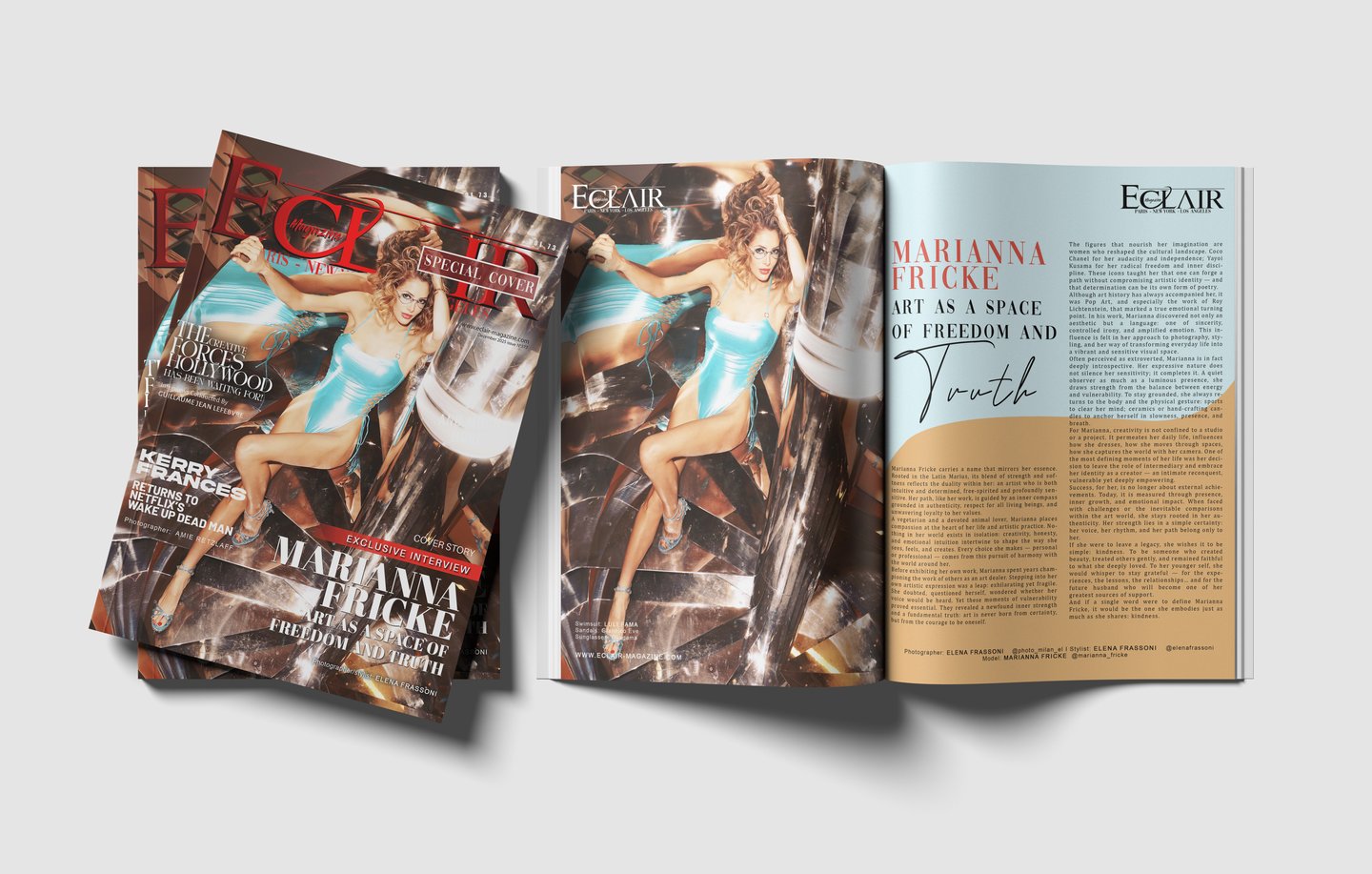
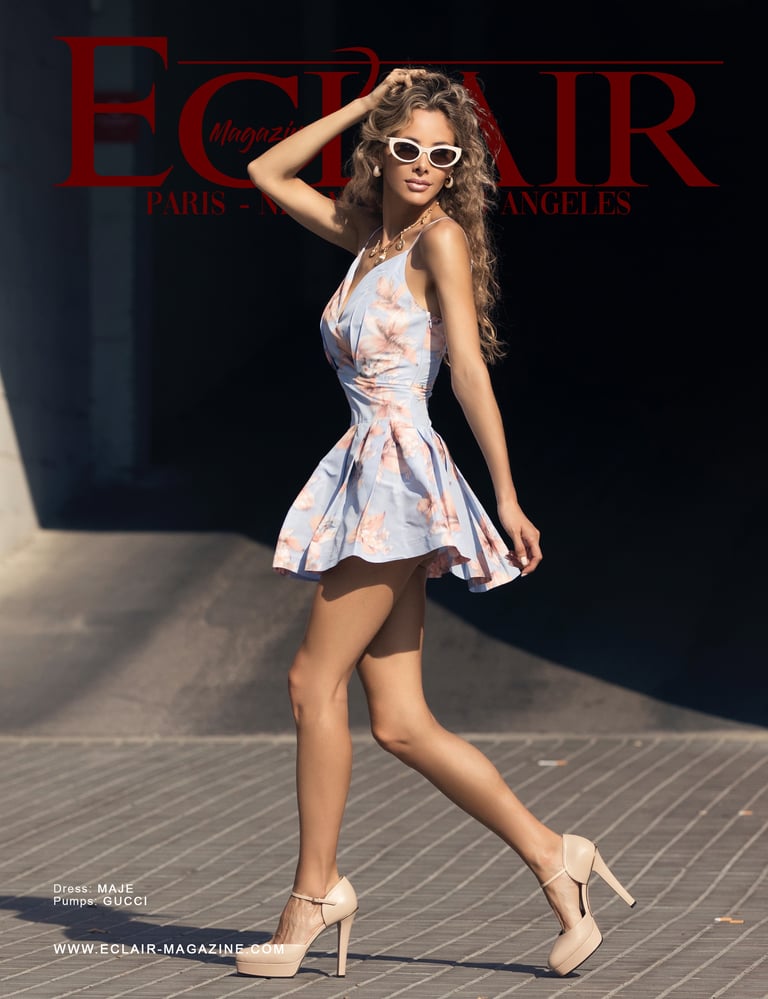
Photographer: Elena Frassoni - @photo_milan_el
Stylist: Elena Frassoni - @elenafrassoni
Model: Marianna Fricke - @marianna_fricke
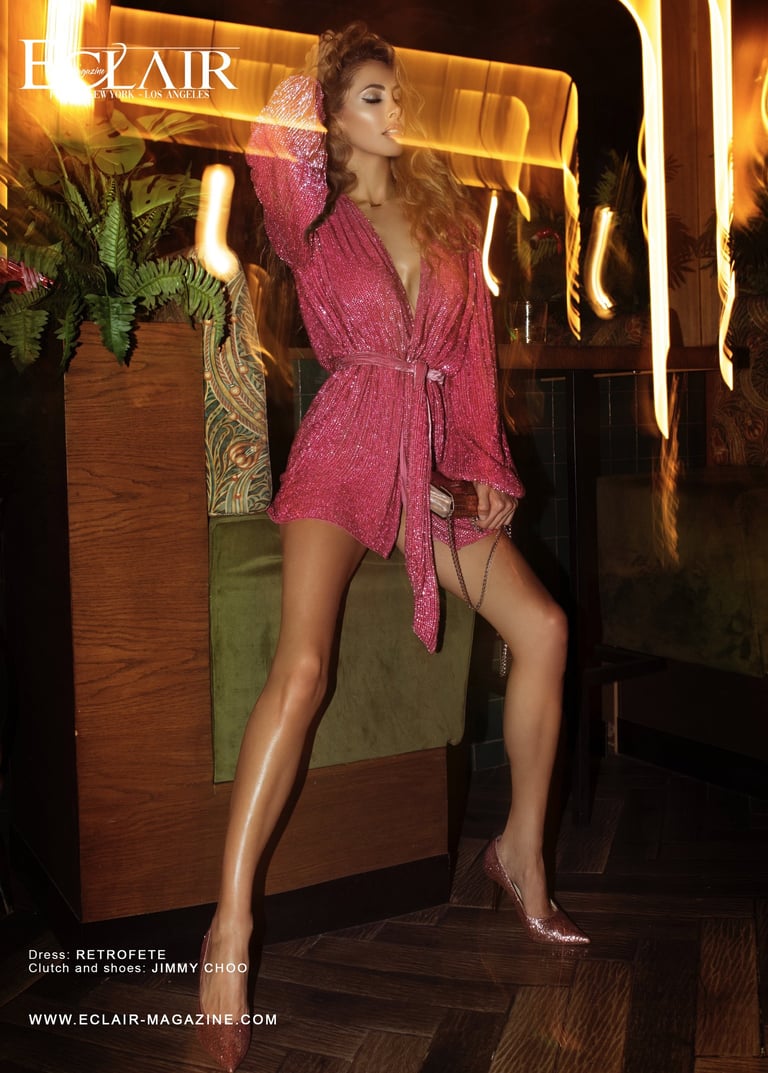
You seem to create from a space of deep emotional sincerity. How do you protect that space in moments of doubt, pressure, or emotional overload?
I’m fortunate to have friends who encourage and support me. Their presence helps me stay grounded when things feel overwhelming.
You mentioned that the legacy you wish to leave is kindness. How do you believe art can become a vehicle for gentleness in a world driven by tension?
I hope my art encourages people — including my children — to be more aware of others’ feelings. Gentleness can be a powerful act, and I believe art has the ability to soften us, to remind us to look at others with more empathy and care.
Quality, not quantity
We have made quality our habit. It’s not something that we just strive for – we live by this principle every day.