
EXCLUSIVE INTERVIEW
Cannes 2026: Sir Daniel K. Winn Turns Pain Into Art With Chrysalis
Conducted by Guillaume Jean Lefebvre
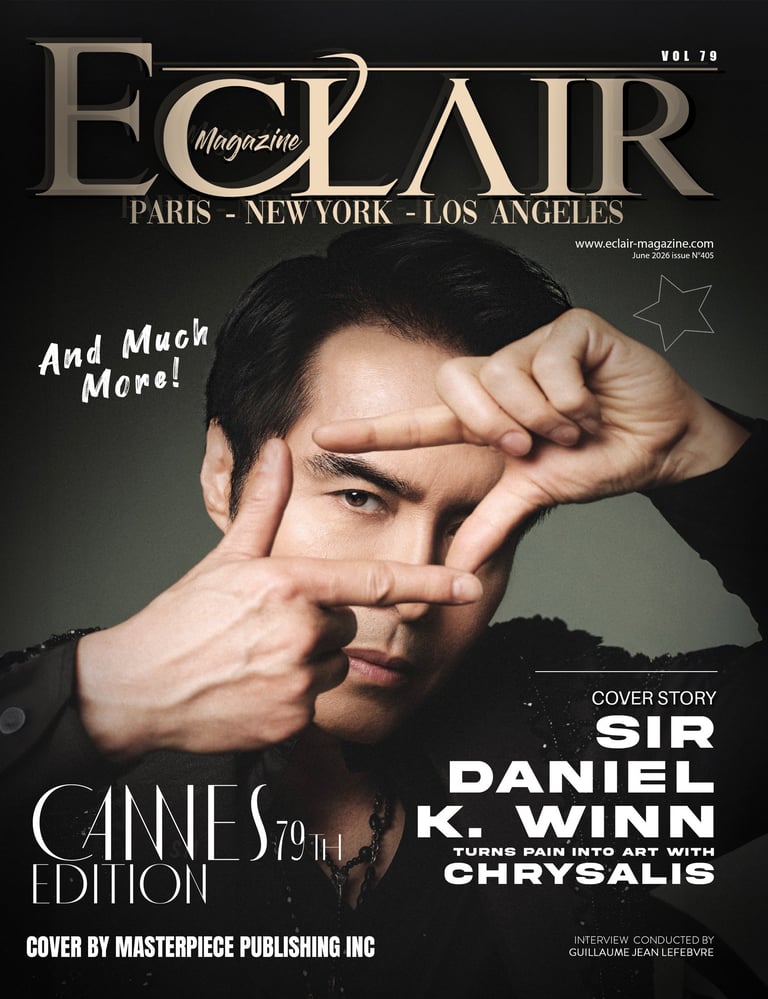
1. In Chrysalis, you open the door to deeply personal memories shaped by war and loss. Was there a moment during filming where revisiting your past became almost overwhelming?
Yes. There were multiple moments where the emotion was overwhelming. Some of the locations the director scouted were the exact places where I was as a child, particularly where I was born in Bien Hoa. The markets in Vietnam are very similar to what they were fifty years ago. Not much has changed in those rural areas. Watching young Daniel interact with the actress playing my grandmother in that same location was almost like watching a memory, but reliving it in real life. The PTSD was prevalent, and it was so real.
2. Your signature style, “Existential Surrealism,” has long blurred the line between reality and inner emotion. How did you translate that visual language into cinema?
For me, Existential Surrealism is like a dream. When we’re dreaming, is it reality? And is reality a dream? Right now I’m awake, but I’m not 100 percent sure I’m not in a dream as well. To translate that ambiguity into a visual language for cinema is fascinating, both philosophical and existential. Cinema art communicates in a way that doesn’t require spoken language. Whether you’re awake or dreaming, the message comes through. It’s like art. It doesn’t speak to you vocally, whether it’s a sculpture or a painting, but it communicates to you in a spiritual way. In cinema art, it does the same through visuals, music, dialogue, and my voiceover. Four ways to communicate that visual language, and a way to translate cinema art and fuse it with fine art.
3. Set against the backdrop of a fractured childhood, Chrysalis speaks of resilience and transformation. What emotional imprint do you hope audiences will carry with them after watching the film?
As human beings, we all experience the same pain, sorrow, and loss, as much as joy, happiness, and overcoming adversity. What I want the audience to feel after they watch this is not just what I’ve gone through, but a reflection of their own adversity, their pain, their trauma, and that they too can overcome all of it to find peace and make a difference in this world. Everything happens for a reason. Each of us can create our own destiny by interpreting our past in a way that we learn from rather than dwell on. We move forward, embracing our existence, which is not necessarily good or bad. It just is. It’s a lesson we need to embrace, to make this world a better place.
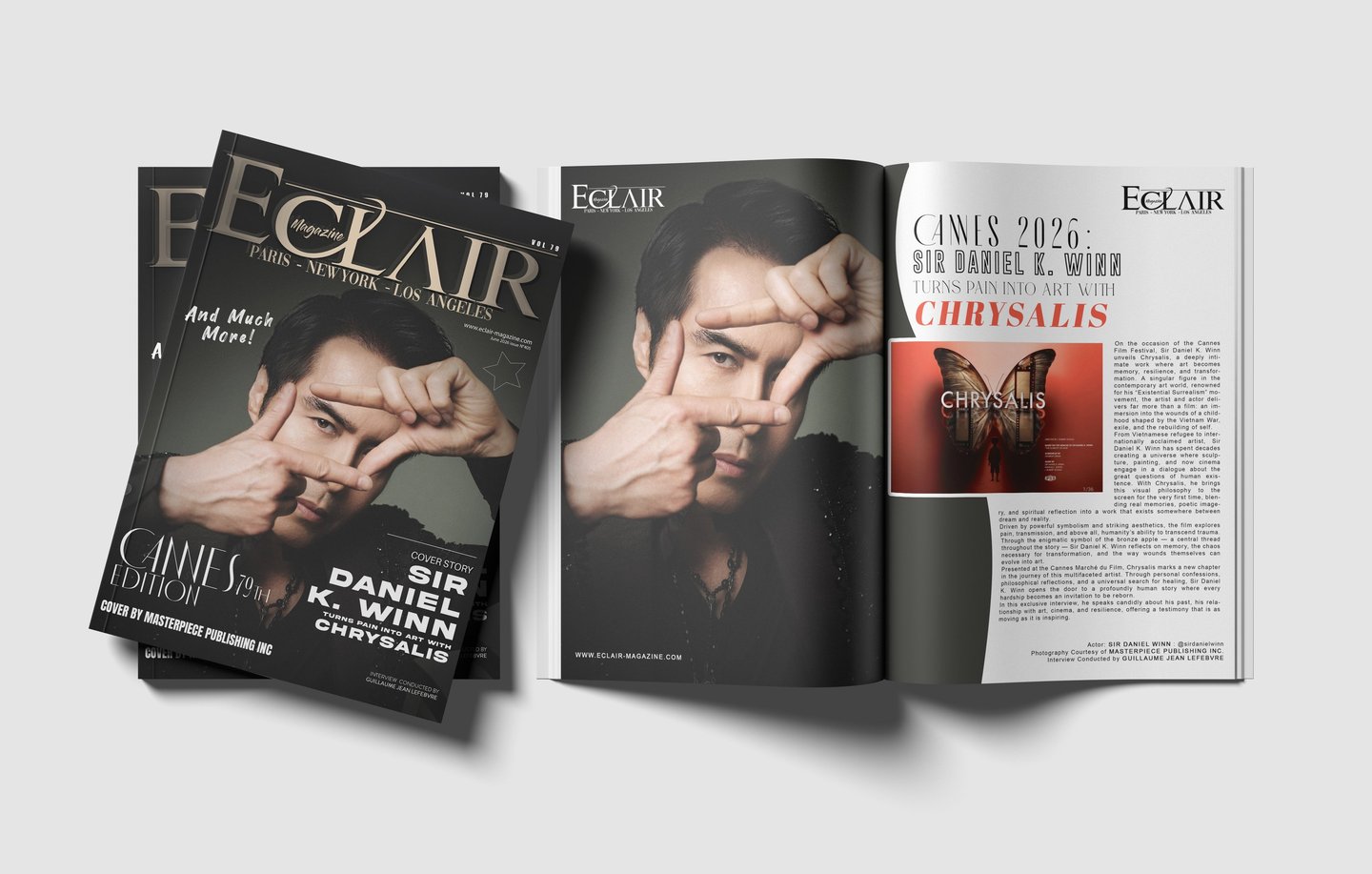
On the occasion of the Cannes Film Festival, Sir Daniel K. Winn unveils Chrysalis, a deeply intimate work where art becomes memory, resilience, and transformation. A singular figure in the contemporary art world, renowned for his “Existential Surrealism” movement, the artist and actor delivers far more than a film: an immersion into the wounds of a childhood shaped by the Vietnam War, exile, and the rebuilding of self.
From Vietnamese refugee to internationally acclaimed artist, Sir Daniel K. Winn has spent decades creating a universe where sculpture, painting, and now cinema engage in a dialogue about the great questions of human existence. With Chrysalis, he brings this visual philosophy to the screen for the very first time, blending real memories, poetic imagery, and spiritual reflection into a work that exists somewhere between dream and reality.
Driven by powerful symbolism and striking aesthetics, the film explores pain, transmission, and above all, humanity’s ability to transcend trauma. Through the enigmatic symbol of the bronze apple — a central thread throughout the story — Sir Daniel K. Winn reflects on memory, the chaos necessary for transformation, and the way wounds themselves can evolve into art.
Presented at the Cannes Marché du Film, Chrysalis marks a new chapter in the journey of this multifaceted artist. Through personal confessions, philosophical reflections, and a universal search for healing, Sir Daniel K. Winn opens the door to a profoundly human story where every hardship becomes an invitation to be reborn.
In this exclusive interview, he speaks candidly about his past, his relationship with art, cinema, and resilience, offering a testimony that is as moving as it is inspiring.
INTERVIEW
4. The bronze apple stands as a striking and almost enigmatic symbol throughout the story. Would you say it represents memory, survival, or something even more personal?
The bronze apple is the main symbolism in the film. The apple, as a metaphor, represents knowledge and wisdom, sometimes a blessing, sometimes a curse. For me, it has various interpretations. Mostly, it is a memory of that last apple given to me by someone very dear. I wanted to immortalize it in bronze so that it’s always there. The deeper symbolism is how the apple was created. Through the lost wax process, there’s chaos, destruction, breaking and mending, transforming clay into bronze to make the apple perfect the way it is. If you want something to be ideal and memorable, there will be chaos and pain before it reaches that point. Through everyone’s journey, adversity has to happen before the truth is realized.
5. From fleeing Vietnam to building an internationally recognized artistic empire, your journey is nothing short of extraordinary. Does this film feel like a culmination of your life’s work, or the beginning of a new chapter?
I don’t go out trying to have my style or my art recognized as an artistic empire. My journey is extraordinary for most, but I don’t look at it that way. I create as a way of healing myself, but also as a way to share with the world how they can heal as well. The pain is like a scar. It is always there. And if it doesn’t heal completely, it transforms into art. I want people to see themselves in my work so that they too can heal. We are all human. We feel the same pain, the same adversity through life and death and life. We just need to learn how to embrace that. If any of this appears extraordinary, it is just a byproduct of what I’m trying to communicate to heal myself.
6. Arriving at Cannes with such an intimate project is a powerful statement. How does it feel to present this part of your story on one of the world’s most prestigious stages?
Screening at the Cannes Marché du Film is an opportunity for me to share my philosophy with the world while I’m still here. I want to communicate why I am alive, answer questions, and have people see that I am a living testament of the movie I’m making, that I have overcome adversity and am still working on maintaining that balance every day. The world is in such chaos. Living sixty years, it seems like the same cycle continues, decade after decade. If the cycle is being continuously repeated in my lifetime, I feel it will continue to repeat in future decades. Hopefully this film, and me being here to answer for my experiences, will share my visions with the world.
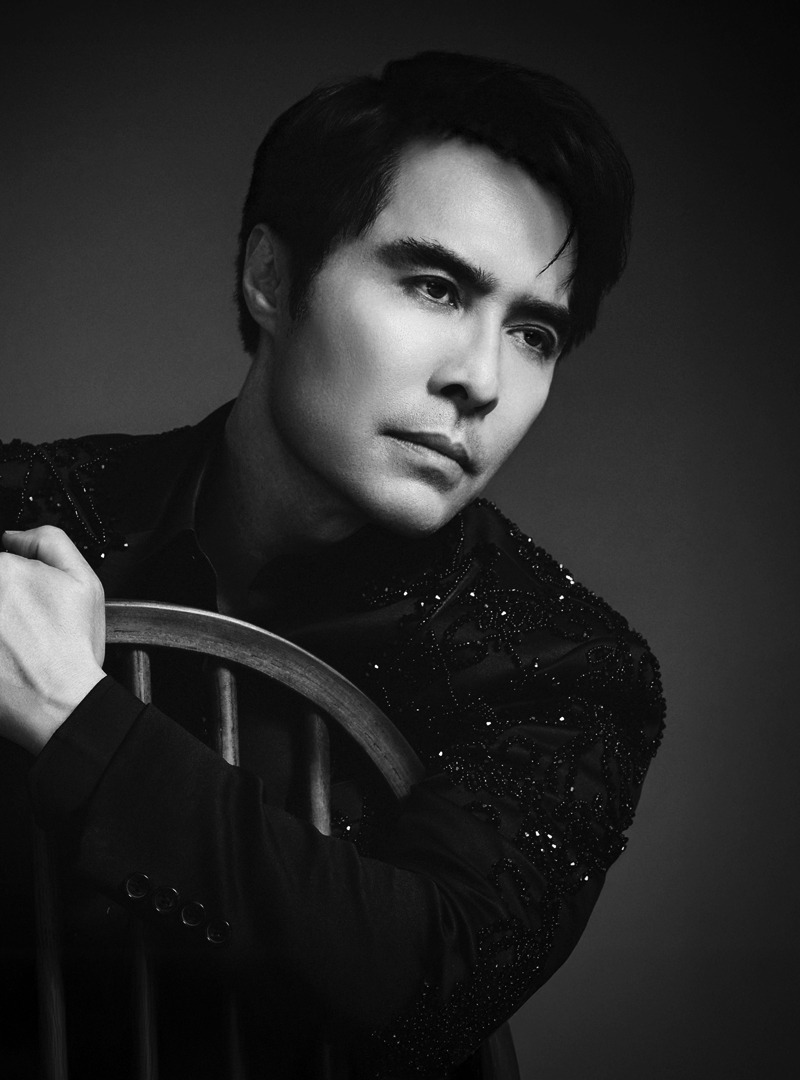
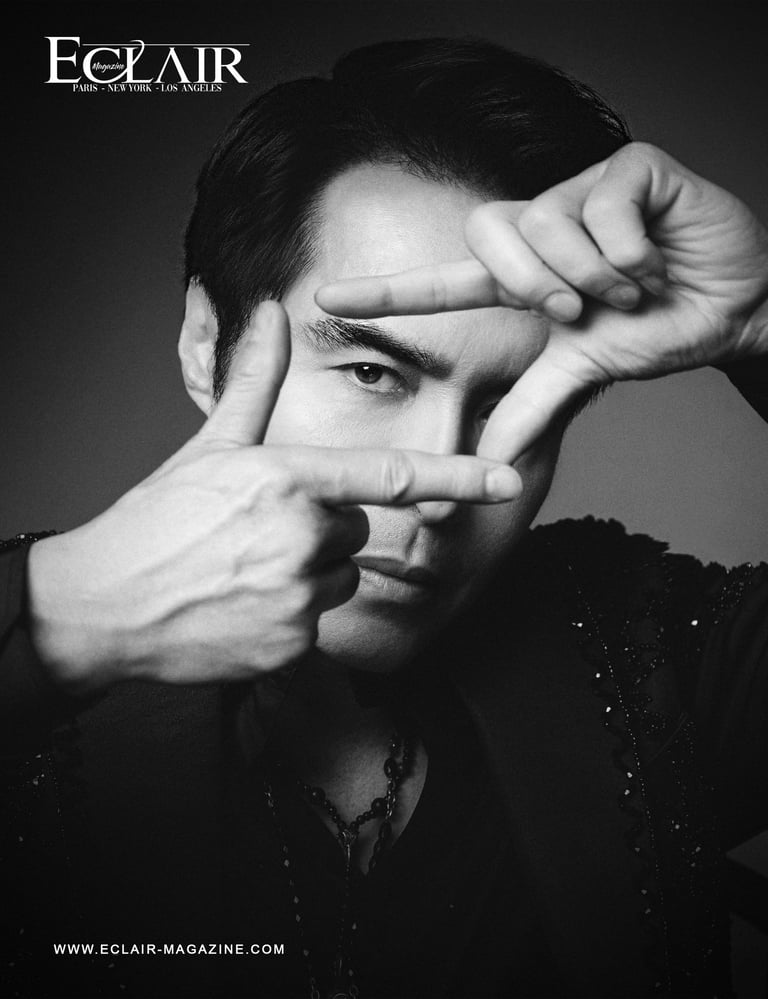
All photo credits go to Masterpiece Publishing Inc.
Actor: Sir Daniel Winn : @sirdanielwinn
7. Your narrative moves between cultures, identities, and histories. How important was it for you to preserve authenticity while still reaching a global audience?
It’s very important for me to preserve the authenticity of my experiences as a child. At the same time, culture is significant, both East and West. My life has the experience of both sides. Because I have experienced both, I’m able to share my identity as a child of both worlds. But ultimately, regardless of culture, we all have the same emotions, the same feelings, the same losses, the same sadness, and similar adversities, sometimes even worse. My narratives are based on experiences I have overcome. Because of the authenticity of where I’ve been, it guides this film into something a global audience can understand through their own experiences in their own culture. Because we are human beings, we feel the same. I think the audience will understand much more when they watch this film.
8. Art, in your story, becomes both refuge and rebellion. In creating Chrysalis, did you find a form of personal healing, or even closure?
There’s never closure in our experiences. To me, in life’s adversities and challenges, it’s about embracing what has happened and understanding the challenges. The wounds we experience through adversity, some are much deeper than others. When those wounds don’t heal, they become part of the art. The art, if you can call that being rebellious, is the message from that wound, communicating. Every time I look at my art, I need to embrace my existence and what has happened. That is also part of the healing. It’s always a process of evolving, understanding, processing, and embracing what has happened, so that we understand our own pain and can hopefully help others overcome theirs.
9. Beyond your artistic achievements, your philanthropic work has impacted many lives. Do you see filmmaking as a new extension of that mission?
With my art, whether two-dimensional paintings or three-dimensional sculptures, when I speak to people who look at it, they feel a sense of healing, even closure, in a way that they can move on. Cinematic art is another venue, another facet for me to communicate my philosophy so others can feel the same. The fusion between my fine art and cinematic art will not only help people process and embrace their existence, it can also help others through their challenges and through philanthropic work. For me, it’s another extension of visual language, giving people an understanding of what they can do in this world through helping others or philanthropically.
10. Looking back, when did you first feel the call toward acting, and did you have people around you who truly believed in that path?
I never considered myself an actor. I have always considered myself a communicator. Even though I speak multiple languages, it’s not enough to communicate my philosophy. My art is one facet to do that. When I heard people wanting to collaborate and bring my philosophy into visual art through cinema, it intrigued me. I want to communicate another way, so that more can understand what I’ve been through and understand themselves. The people around me truly believe my fine art communicates very profoundly. I felt visual art through cinema could do so much more, because there are so many more frames in a movie than in one painting. With a fusion of fine art and cinema art, my philosophy reaches a much wider audience, much faster.
11. Every remarkable journey includes moments of doubt. Were there times when you nearly walked away from it all, and what ultimately brought you back?
There’s always insecurity in myself, and I believe in a lot of us. We’re all human. When we confront adversity, we just want to hide and not face the harsh reality. What brings me back to moving forward is the experience of having had to overcome adversity. There is no option or choice. My life is very brief in this world. Whatever happened to me in the past, I have overcome. When the next project becomes very challenging, yes, I become insecure, and yes, do I feel like walking away? Absolutely. But because I have processed and embraced my past, I am able to move forward. My life is too short. This is my time. I cannot wait. Every moment I wait, I lose that opportunity to communicate my philosophy. That insecurity is insignificant compared to what I want to do in this world while I’m still here.
12. If you could speak to the child you once were, or to a new generation of dreamers, what truth or advice would you offer them today?
My advice would be that this world will not be easy. There will be pain. But through that pain, happiness is also there. There’s no sweet without the sour. Embrace the moment, and understand that it is not necessarily right or wrong. It is life. Birth is the opposite of death, but not one is necessarily better than the other. Night and day, the same. Whatever happens, embrace your moment. Don’t lose your understanding of what your purpose should be in this universe. Only you can determine that. When you feel pain, look at it as an experience you can feel, because if you can feel pain, you can feel happiness as well. That is what life is: challenges, overcoming them, becoming and doing what you want to do, to make the world a better place before you leave it.
Quality, not quantity
We have made quality our habit. It’s not something that we just strive for – we live by this principle every day.