
EXCLUSIVE INTERVIEW
Sydney
Mikayla:
From General Hospital
to Crybaby Bridge,
the Rise of a Must-Watch
Storyteller
Conducted by Guillaume Jean Lefebvre
1. You are widely known for your fan-favorite role as Trina Robinson on General Hospital, which earned you two Daytime Emmy nominations. What has this character meant to you personally, and how did playing Trina shape your journey as an actress?
Playing Trina Robinson on General Hospital has been incredibly gratifying and deeply meaningful to me. What a lot of people don’t realize is that the role actually began as a day player/co-star situation, so just being invited into that space felt like a huge opportunity. I was especially excited to be working alongside such talented actors like Eden McCoy and William Lipton—people who were already doing such strong, Emmy-recognized work. Being on set with them pushed me and inspired me every single day.
To then be brought on as a contract player for two years, and to receive two Daytime Emmy nominations, was honestly surreal. It wasn’t something I expected, so I approached it all with a lot of gratitude and a sense of awe.
On a personal level, Trina means a great deal to me. I see her as a reflection of Black excellence—she’s driven, intelligent, and constantly rising to the occasion. Whether she’s navigating complex family dynamics or stepping into leadership roles like helping run an art gallery, she does it with strength and integrity. She’s also an incredibly loyal and compassionate friend, and that balance is something I really admire.
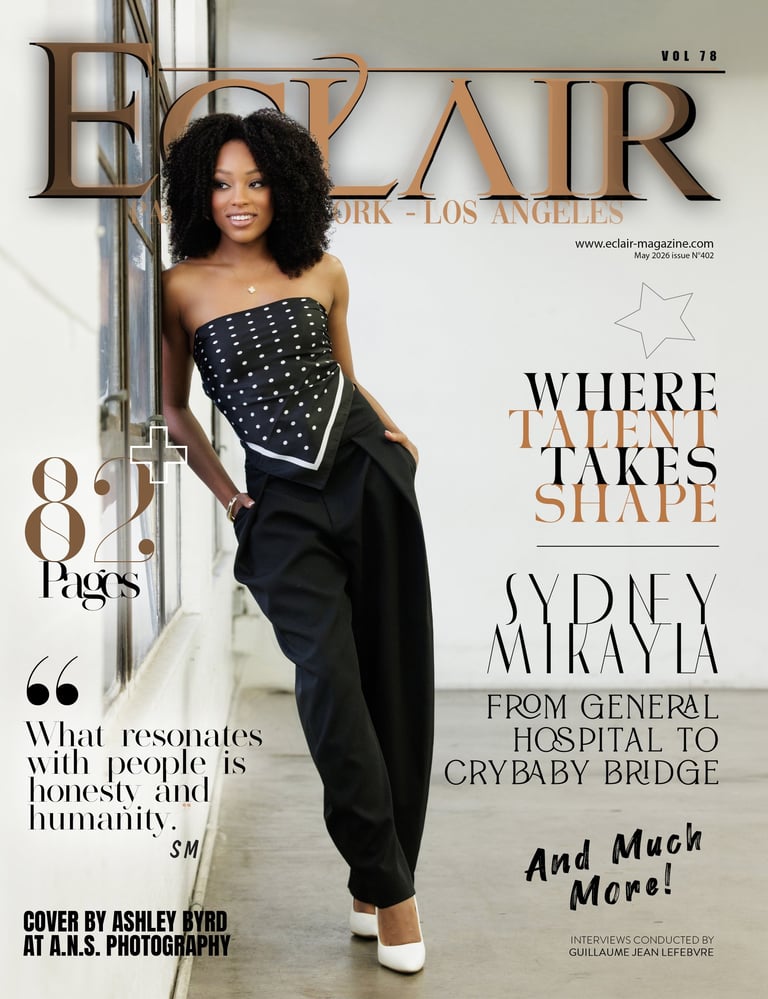
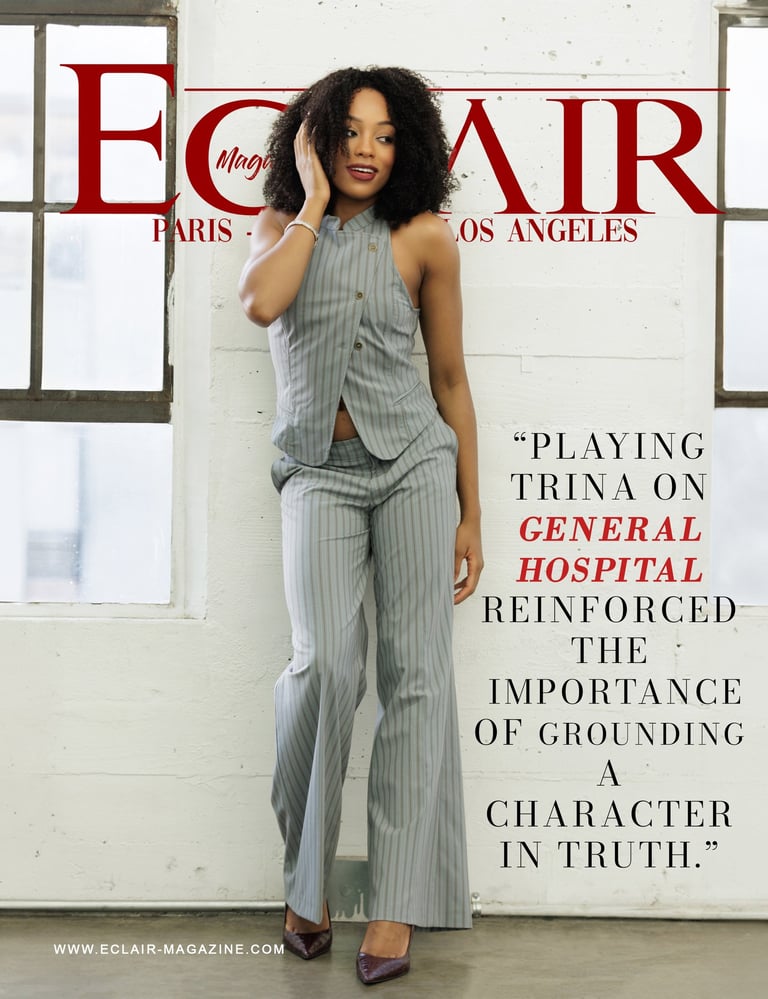
As an actress, playing Trina reinforced the importance of grounding a character in truth. No matter how heightened the circumstances, what resonates with people is honesty and humanity. Trina taught me to lean into that—to keep characters layered, relatable, and real.
2. Your thriller film Crybaby Bridge, which you also produced, is available now on Amazon Prime Video and other VOD platforms. What initially drew you to this story, and why was it important for you to be involved not only as the lead but also as a producer?
What initially drew me to Crybaby Bridge was the depth and complexity of Samantha, the character I play. She’s navigating so much—she’s 16, adopted, pregnant, and trying to understand her identity while quite literally bringing new life into the world. That kind of emotional layering is exactly what draws me in as an actress. As an actor, you’re drawn to those contradictions—the messiness, the tension, the humanity within it.
Stepping into the role as a producer felt like a natural extension of that. I really wanted to make sure Samantha was portrayed with honesty and care—that even in her darkest moments, you could still see her humanity. Having that level of creative input was incredibly empowering, and it’s definitely inspired me to continue producing and even executive producing in the future. This project really felt like me stepping more fully into my voice—not just as an actress, but as a storyteller.
Revealed at a young age on screen, Sydney Mikayla has quickly established herself as one of the most compelling voices and on-screen talents of her generation. Moving seamlessly between live-action television, animation, and now producing, her journey reflects a multifaceted artist driven by authenticity and a deep desire to tell meaningful stories. Widely recognized for her standout role as Trina Robinson on General Hospital, which earned her two Daytime Emmy nominations, she has continuously expanded her creative horizons.
Today, Sydney Mikayla is stepping into a new chapter with more personal and ambitious projects, including the thriller Crybaby Bridge, where she takes on both leading and producing roles. Through emotionally rich performances and a strong commitment to authentic storytelling, she represents a new wave of artists reshaping the industry.
In this interview, she opens up about her journey, inspirations, and future ambitions, offering an intimate glimpse into a career that is only just beginning to soar.
INTERVIEW
3. Crybaby Bridge explores themes such as the weight of the past, hidden secrets, and the search for a fresh start. What aspects of this role challenged you the most emotionally or creatively?
Crybaby Bridge deals with such layered themes, and for me, the biggest challenge with Samantha was honoring all of those layers at once in every moment. She’s 16, adopted, pregnant, and carrying so much emotional weight, so it was about constantly holding that internal world while still being fully present in whatever was happening in the scene.
That balance was the most demanding part, both emotionally and creatively: making sure her broodiness and inner conflict were always there, but not letting it become one-note—keeping her dynamic, specific, and alive in each beat.
But honestly, that’s also what made it so exciting. It felt like taking a big bite out of a really layered cake—you’re experiencing multiple flavors at once, and the challenge is making sure each one still comes through. That complexity is what pushed me as an actress and made the role so fulfilling.
4. You have voiced several memorable characters in animation, including Robby Malto in Transformers: EarthSpark and Soleil Le Claire in Fright Krewe. What does voice acting allow you to explore artistically that on-screen acting sometimes does not?
First, I just want to say how genuinely grateful I am for my voiceover career. I feel like I fell into it in the best way, and it’s become such a meaningful extension of my work as an actor. What I love about voice acting is the freedom. It really lets me tap into a more theatrical, imaginative space—the kind you’re encouraged to explore in acting classes or improv, where you can be anything: a princess, a dragon, a knight. There are no limits, and no one is questioning whether you “fit” the role. That kind of creative permission is so freeing. Projects like Transformers: EarthSpark and Fright Krewe really allowed me to lean into that. Voiceover gives you the opportunity to fully embody characters that might not always be accessible in on-screen work, where there are often more visible expectations tied to how you look.
There’s a sense of whimsy and boundlessness in voice acting that I really cherish. It reminds me why I fell in love with acting in the first place—it’s pure imagination, and it allows me to express myself in ways that feel both playful and limitless.
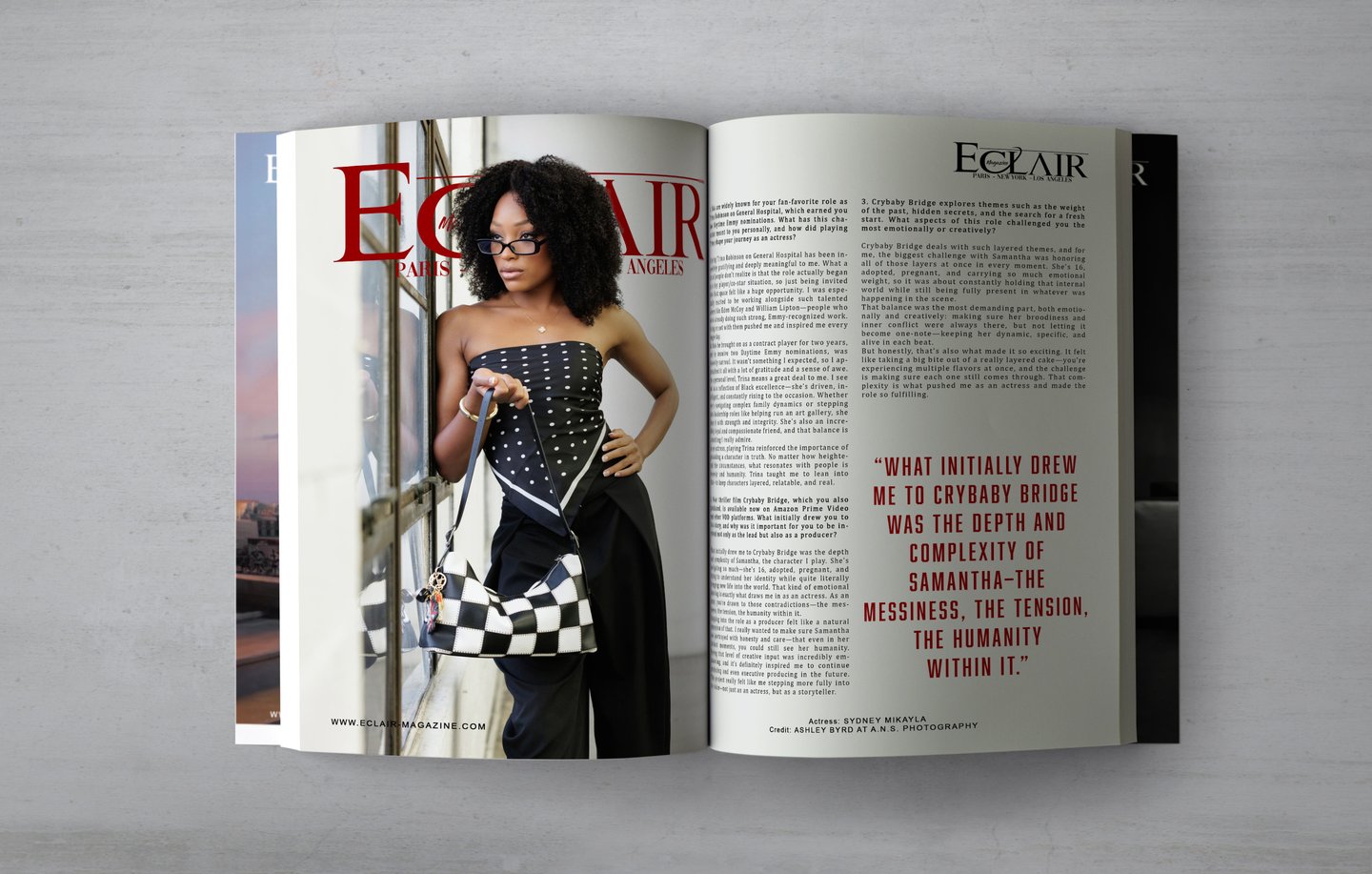
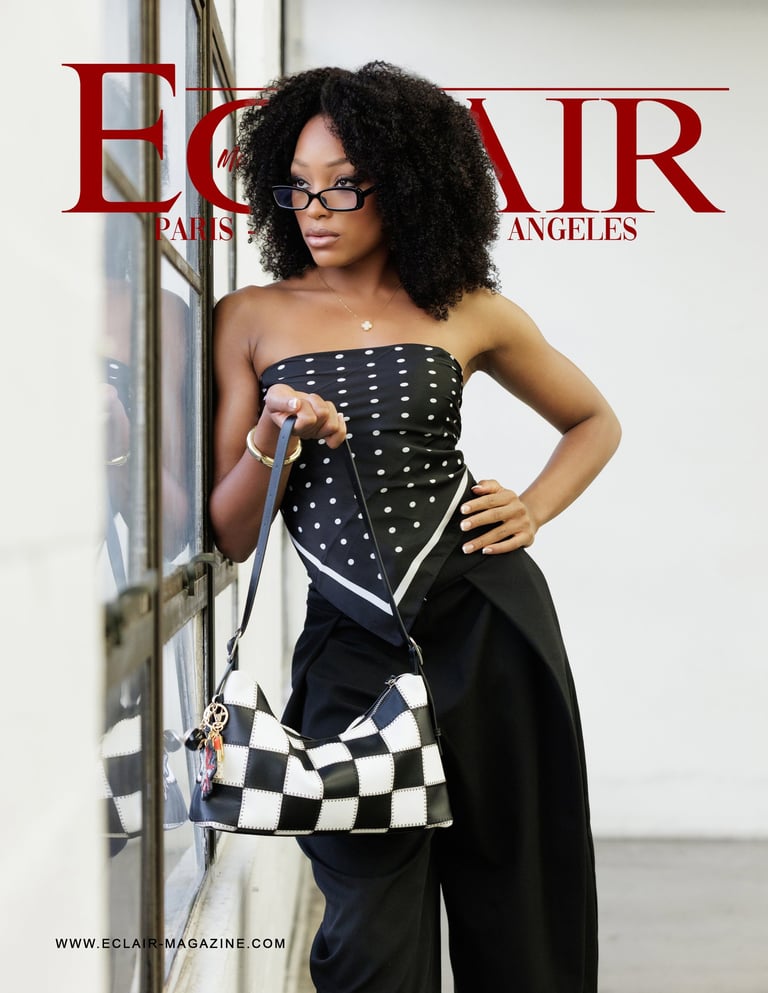
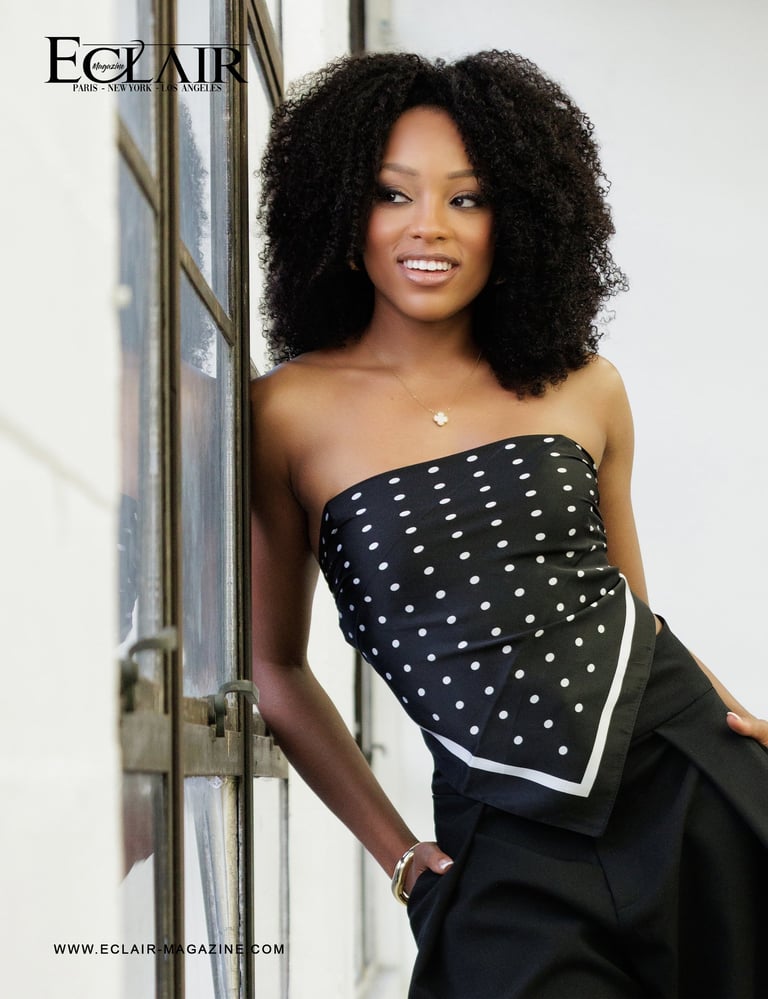
Actress: Sydney Mikayla
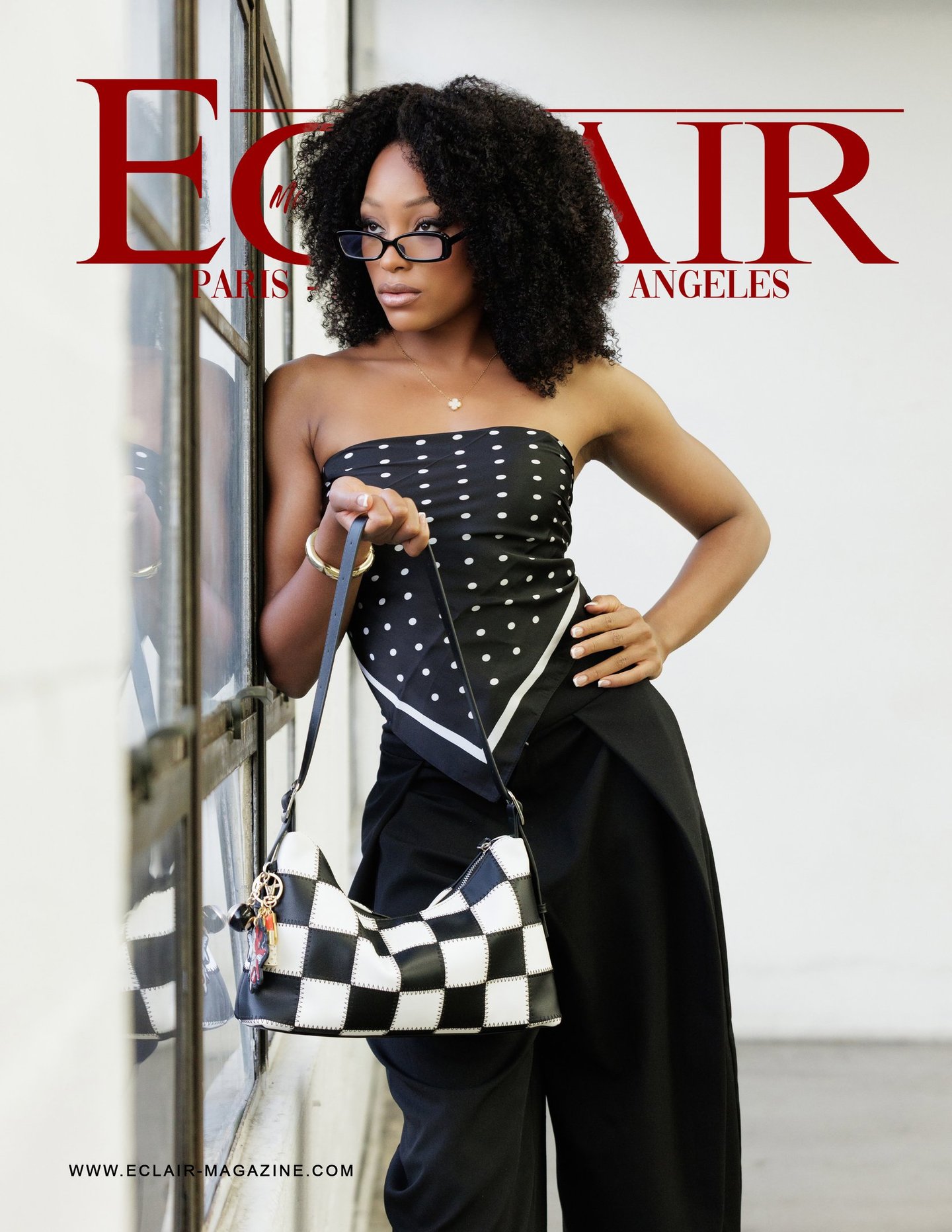
Photographer: Ashley Byrd at A.N.S. Photography
5. Fans also know you as Wolf in the Netflix animated series Kipo and the Age of Wonderbeasts. How do you build emotional depth and personality for a character when your performance relies entirely on your voice?
When it came to playing Wolf in Kipo and the Age of Wonderbeasts, I really built her emotional depth from a place of authenticity—just grounding everything in truth and, honestly, in myself. At the end of the day, acting is acting, whether it’s on screen or behind a mic. I also feel incredibly grateful, because so much of what people connect to isn’t just me—it’s the entire team. The animators, directors, and producers all play such a huge role in bringing the character to life. I’m just one piece of that, and I was lucky to be surrounded by people who elevated the performance and helped translate it visually in such a powerful way.
For me, Wolf almost felt like a little sister. I approached her by asking, “Who would I be if I grew up in those circumstances—raised by wolves, navigating the world alone at such a young age?” It became about finding a version of myself in a completely different environment, almost like another dimension of who I am.
I connect to Wolf deeply in that sense of not always feeling like you belong to the pack. That’s something so many people experience, and I think that’s why she resonates. Even in a world that’s so heightened and imaginative, that emotional truth—the desire to belong—has to feel real.
6. You portrayed the iconic gymnast in the television film The Gabby Douglas Story alongside Regina King, a performance that earned you a Young Artist Award. How did you prepare to portray such an inspiring real-life figure?
Preparing to play a young Gabby Douglas in The Gabby Douglas Story was honestly all about research—like, research, research, and more research. But I loved it. It felt like getting to fully dive into her world and really understand what makes her her—not just the gymnast everyone sees, but the person behind it. What’s so fun about doing a biopic is that you’re not building a character from scratch; you get to study a real person. You can watch interviews, see how they move, how they think, how they carry themselves. It almost feels like putting together a puzzle instead of starting with a blank page.
I also got to talk to Gabby a bit, which was such a cool, full-circle moment. Being able to hear from her directly just made everything feel more real and helped me ground the performance even more. And honestly, as an African American studies major, I love that kind of deep dive. I’m the kind of person who will happily go down a rabbit hole, digging through history and context, so it didn’t even feel like work—it felt like I was just doing something I genuinely enjoy. It made the whole experience even more special.
7. Earlier in your career, you appeared in several popular series including School of Rock, Fuller House, and Criminal Minds. How did these early experiences on different sets help shape you as a performer?
My early experiences on shows like School of Rock, Fuller House, and Criminal Minds really laid the foundation for me as a performer. More than anything, they taught me discipline at a very young age. I remember even earlier on, working on Game Shakers, I had a moment where they changed my lines last minute and I had to learn and perform a full paragraph in about five minutes. At the time, it felt intense, but looking back, it really trained me to stay ready, adapt quickly, and trust myself under pressure.
Being a child actor also meant balancing school at the same time, which was no joke. I was in public school, so I had to stay on top of my coursework while working—communicating with teachers, getting assignments ahead of time, and making sure I came back having everything completed. That experience really taught me how to manage my time and think ahead.
So, between being on set and keeping up with school, I learned early on that nothing can really be last-minute. You have to be prepared, organized, and proactive. Those habits have stayed with me and continue to shape how I approach my work today.
8. You trained at the Amazing Grace Conservatory under the guidance of Wendy Raquel Robinson, as well as at the Debbie Allen Dance Academy. What are some lessons from that training that still influence your work today?
Working under mentors like Ms. Wendy and Mrs. Allen was incredibly formative for me. They each instilled a sense of tenacity and discipline, but in their own distinct ways. One of the biggest lessons I took from those experiences is that opportunities aren’t just given—you have to be prepared to meet them fully.
Being in those conservatory-style spaces also taught me a different kind of awareness. In the best way, there’s always someone watching, someone just as talented, observing how you work, how you prepare, how you carry yourself. Not from a negative place, but from a place of ambition and curiosity. It creates an environment where you’re constantly encouraged to stay on your P’s and Q’s, to remain disciplined, and to consistently bring your best—not out of fear, but out of respect for the craft and the opportunity.
9. In addition to acting and producing, you are an accomplished dancer trained in contemporary ballet, contemporary, tap, and hip-hop. How does dance influence your creativity and the way you approach your roles?
Dance has had a huge influence on how I approach my work as an actor. For me, it really comes down to physicality—understanding how a character moves, holds themselves, and exists in their body.
Training in styles like contemporary ballet, tap, and hip-hop taught me how to be aware of every part of my body and how to use it intentionally. That awareness carries directly into my acting. It helps me fully embody a character, not just emotionally, but physically as well.
I try to bring that into everything I do—even voiceover. Even though you’re behind a mic, I still think physicality matters. How you’re standing, how you’re moving, the energy in your body—it all translates into the voice in a way people can feel, even if they can’t see it. So, dance really grounds me in that sense. It reminds me that performance isn’t just about what you say—it’s about how you live in the character.
10. With a career spanning live-action television, animation, and now producing, what kinds of stories or projects are you most excited to pursue in the next chapter of your career?
That’s such a great question. I’m really excited about stepping into more physical comedy—I think that would be so much fun and a great way to bring together my background in movement and performance. I’d also love to explore stunt work and action-comedy, just pushing myself in new, more physical directions as an actress.
On the storytelling side, I’m really drawn to creating and being part of projects that genuinely move people—especially in television, since that’s where I’ve spent so much of my career. I’d love to collaborate with creatives like Issa Rae, Quinta Brunson, and Shonda Rhimes—people who are telling bold, culturally impactful stories while still keeping them entertaining and accessible.
Long-term, I really admire careers like Donald Glover and Snoop Dogg—artists who don’t limit themselves to one lane. They act, create, produce, explore music, and build worlds. That kind of versatility is really inspiring to me. I want my next chapter to reflect that same energy—expanding, creating, and telling stories that feel honest, dynamic, and impactful.
Quality, not quantity
We have made quality our habit. It’s not something that we just strive for – we live by this principle every day.